
Private AI does not begin with the first generated token.
It begins with how the input is split, counted, padded, truncated, and wrapped before the model ever sees it.
That is tokenizer policy.
And tokenizer policy is part of route identity.
Current primary-source docs already show why. vLLM exposes separate flags for tokenizer path, tokenizer mode, and tokenizer revision. Hugging Face's current tokenizer docs say the tokenizer controls padding, truncation, and special token insertion. The current tokenizer summary shows the same word can split differently depending on the vocabulary. The main tokenizer API docs say offset mappings are available on fast tokenizers but raise NotImplementedError on Python tokenizers. Current chat templating docs also show two instruction models fine-tuned from the same Mistral base model using different control tokens, with the wrong tokens hurting performance.
That is why private AI teams need a tokenizer contract.
A tokenizer contract defines which tokenizer artifact is approved, which revision is pinned, which implementation mode is allowed, how chat formatting is applied, and what evidence proves the served route used the expected tokenization behavior.
Why this matters now
Open-weight deployment is becoming more modular.
That is useful. It lets teams mix runtimes, upgrade models, and move faster. It also creates a subtle failure mode: the organization may think it changed only the server or the weights, while the tokenizer path or tokenizer behavior changed underneath the same route name.
That drift is expensive because tokenizer behavior shapes context fit, stop boundaries, citation spans, chat formatting, and tool prompts. In other words, it shapes whether the workflow the business validated is still the workflow actually running.
The docs already show that tokenization is part of route identity
1. vLLM treats tokenizer selection as a first-class serving input
vLLM's current engine-arguments documentation defines --tokenizer as the name or path of the Hugging Face tokenizer to use if it is not the same as the model path. The same page exposes --tokenizer-revision as a separate revision control and says it can be a branch, tag, or commit id.
That is a direct product signal. A serious private AI serving stack already treats tokenizer identity as independently configurable. If the runtime exposes that lever, the release process should capture it.
2. vLLM also exposes tokenizer implementation mode
The same current vLLM docs expose --tokenizer-mode with choices including hf and slow, and say the hf path uses the fast tokenizer if available while slow always uses the slow tokenizer.
That matters because implementation mode is not just speed tuning. It changes which tokenizer backend is active and can change what downstream workflow features are available.
3. Hugging Face documents that tokenizers control padding, truncation, and special tokens
Hugging Face's current fast-tokenizer docs say most tokenizers resolve to a fast Rust-based tokenizer and that the tokenizer call encodes text into model inputs while controlling padding, truncation, and special token insertion.
Those are workflow controls, not cosmetic details. If tokenization policy changes, context fit and prompt structure change with it.
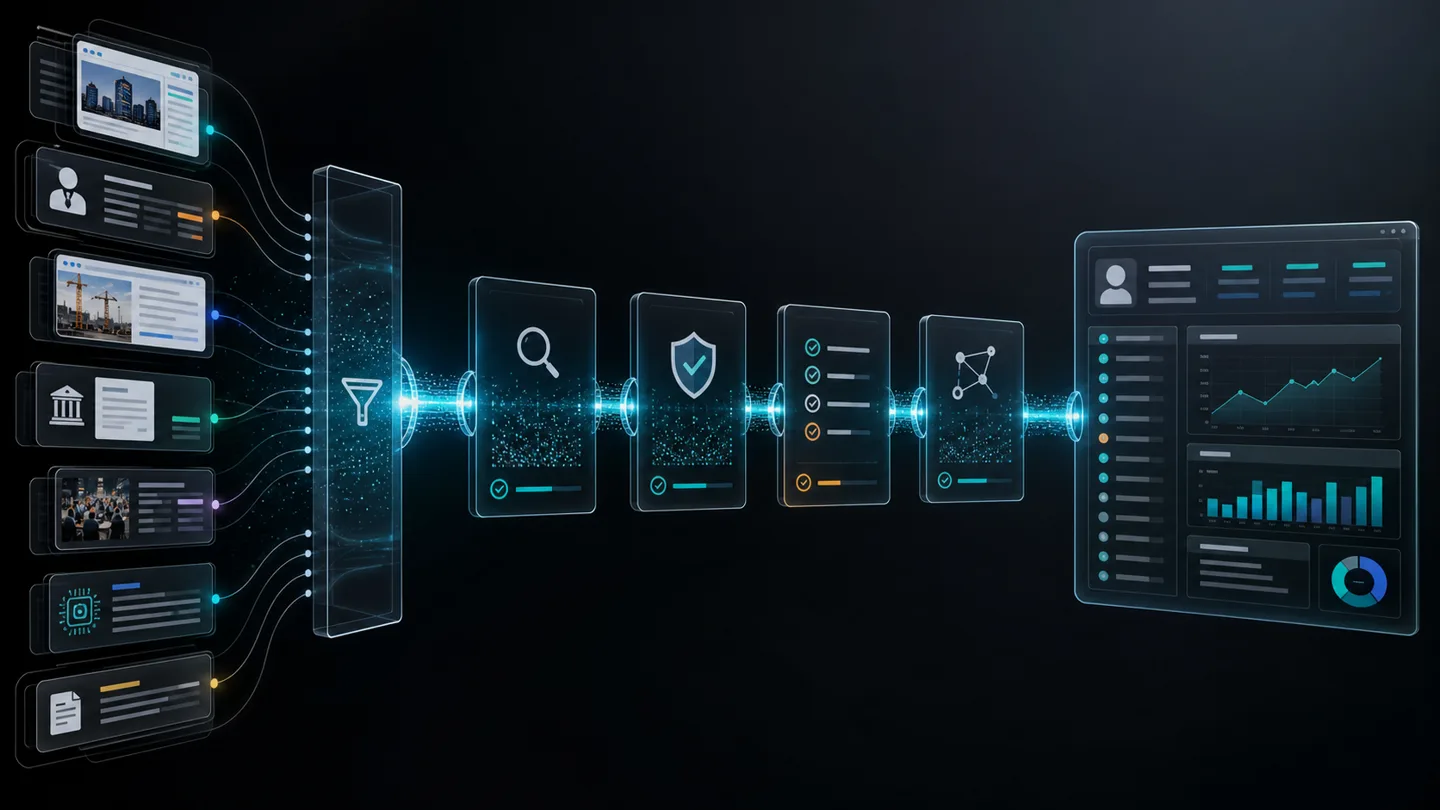
4. The same text can split differently depending on the vocabulary
Hugging Face's current tokenizer-summary docs make this concrete. They show that a word like annoyingly might be split into ["annoying", "ly"] or ["annoy", "ing", "ly"] depending on the vocabulary.
That means token count is not a stable property of the raw text alone. It depends on the approved tokenizer and vocabulary state attached to the route.
5. Some downstream evidence features depend on fast tokenizers specifically
The current Hugging Face tokenizer API docs say return_offsets_mapping is only available on fast tokenizers inheriting from PreTrainedTokenizerFast, and that using Python's tokenizer will raise NotImplementedError.
That is operationally important for document review, citation spans, and any workflow that needs character-to-token alignment. A route can look interchangeable in chat while breaking the evidence features a business actually cares about.
6. Models sharing the same base weights can still require different control tokens
Hugging Face's current chat-templating docs show two models fine-tuned from the same Mistral-7B base model using different control tokens: Mistral-Instruct uses [INST] markers while Zephyr uses <|user|> and <|assistant|>. The same docs say wrong control tokens can drastically hurt performance.
That is the tokenizer contract in practical terms. Even when the base model lineage looks familiar, the prompt envelope still needs route-specific approval.
What breaks when the tokenizer contract is missing
1. Context-fit calculations drift
A route that passed evaluation with one tokenizer revision may truncate earlier with another. Teams may think they changed only infrastructure, then discover later that the production route now clips long evidence packets or tool instructions.
2. Citation and review offsets become unreliable
If a workflow depends on offset mapping, fast-versus-slow tokenizer drift can break the exact evidence features that make the output reviewable.
3. Chat behavior regresses under familiar model names
Operators may assume an instruction-tuned route will behave like a sibling model from the same family. If the control tokens or template behavior differ, the route can degrade even while the weights and benchmark stories sound similar.
4. Rollbacks become incomplete
A rollback record that restores only the model revision is incomplete if the known-good route also depended on a particular tokenizer revision, implementation mode, or template behavior.
5. Buyer diligence stays too shallow
Teams ask where the model runs and which weights are loaded. They ask less often how the input is tokenized. That leaves a real release variable out of procurement, review, and incident response.
What a tokenizer contract should include
1. Approved tokenizer artifact and path
Name the tokenizer that belongs to the route. If the runtime can load a separate tokenizer path, record that path explicitly instead of assuming it matches the model by default.
2. Tokenizer revision policy
Pin the tokenizer revision with the same seriousness used for model revision. Branch defaults are convenient for experimentation, not for stable route identity.
3. Implementation-mode policy
Record whether the route expects fast tokenizers, slow tokenizers, or runtime-specific tokenizer modes. If the workflow requires offset mappings or review features that depend on fast tokenizers, fail closed when that condition is not met.
4. Chat-format and special-token handling
State how chat prompts are wrapped, where control tokens come from, and whether downstream tokenization should avoid duplicating special tokens after template application.
5. Context-fit validation
Bind the tokenizer contract to token-count and truncation checks using the actual validated prompt structure. Long-context claims are not enough if the live tokenizer counts differently from the test route.
6. Evidence for the actual served behavior
Keep release evidence showing tokenizer path, tokenizer revision, tokenizer mode, template path if relevant, and the validation run that approved the route with those exact settings.
Questions buyers and operators should ask
- Is the production route pinned to a specific tokenizer path and tokenizer revision?
- Can the runtime switch between fast and slow tokenizers, and what breaks if it does?
- What proves the validated context-fit numbers were measured with the same tokenizer now running in production?
- Do citation spans, offset mappings, or review features depend on a fast tokenizer?
- Which control tokens or chat template does this route expect?
- If we roll back tonight, do we restore the tokenizer state as well as the model state?
The commercial takeaway
Private AI buyers are learning to ask where the weights live.
The better question is broader: what exact route did we approve?
If the tokenizer can drift independently, then the answer is not complete until tokenizer artifact, tokenizer revision, tokenizer mode, and prompt-format behavior are pinned alongside the model. The teams that understand this will spend less time chasing mysterious context regressions and more time shipping local inference systems that are easier to validate, recover, and trust.
If the organization cannot name the tokenizer contract behind the route, it cannot fully explain why the route still behaves like the one it tested.
Related reads
- Private AI Needs a Chat Template Contract: Why Message Arrays Are Not Enough
- Private AI Needs a Token Accounting Contract: Why Count, Fit, and Truncation Still Drift
- Model Names Are Not Release IDs: Why Private AI Needs a Revision Contract
- Private AI Needs a Model Bundle Contract: Why Weights Alone Are Not a Deployable Product