
Private AI teams often think they have standardized once the endpoint looks OpenAI-compatible.
Same messages array. Same tool list. Same client SDK. Same route name. Done.
That is not the real compatibility boundary.
The real boundary is how the runtime converts those messages into tokens and tool instructions for the model you actually deployed.
Current Hugging Face documentation states the key point plainly: all causal language models continue a sequence of tokens, and chat messages get converted into token sequences with control tokens such as user, assistant, and end-of-message markers. The same docs also say different chat models can use different formats or control tokens even when they were fine-tuned from the same base model.
That means a private AI route is not fully specified by model family plus API shape. It also depends on the tokenizer, the chat template, and, for tool use, the function-calling format wrapped around the prompt.
Why this matters more now
This problem used to hide inside bespoke prompt code. It matters more now because private AI teams are standardizing transport and mixing runtimes.
Today it is normal to see an enterprise stack that combines:
- OpenAI-compatible serving for application integration,
- open-weight model swaps across Qwen, Llama, Mistral, or others,
- multiple runtimes such as vLLM, Transformers, or SGLang,
- tool use for retrieval, browser actions, file work, or internal APIs,
- structured outputs and JSON-bound workflows that assume stable formatting.
That stack looks standardized from the outside. It is not standardized at the prompt layer unless the template contract is pinned.
The official docs already describe the hidden contract
The evidence is unusually direct.
Hugging Face’s current chat templating documentation says there are many possible chat formats and that different models may use different formats or control tokens even when they were fine-tuned from the same base model. The docs explain why: the model is not reading your Python dictionaries. It is continuing a token sequence produced by the template and tokenizer.
Qwen’s current function-calling documentation makes the same issue operational. It says the technical details of function calling with Qwen3 are mainly about the templates, recommends Hermes-style tool use to maximize function-calling performance, and introduces usage through a dedicated function-calling chat template.
vLLM’s current tool-calling documentation pushes the point into deployment. Its example server startup for tool use uses a model-specific tool-calling chat template and a named tool-call parser. In other words, tool-capable serving is not just model plus endpoint. It is model plus parser plus template plus transport.
Put those together and the practical conclusion is simple: message arrays are a client convenience, not the production contract.
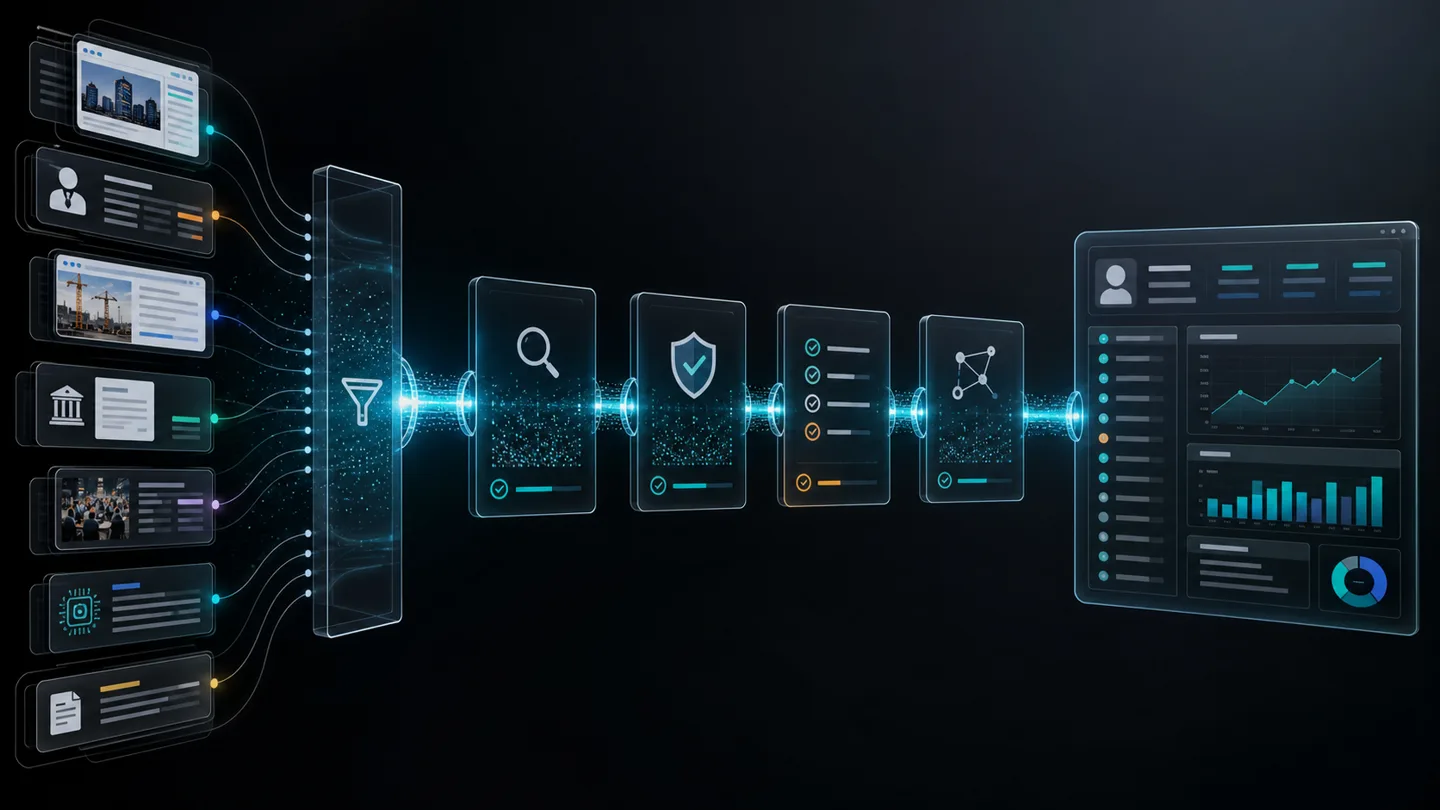
Transport compatibility is not prompt compatibility
This is the mistake behind a lot of private AI disappointment.
A team validates a workflow on one route, then swaps to another route with the same API surface. The JSON client still works, so everyone assumes the behavior should still be close enough.
Sometimes it is. Sometimes it is not.
Common breakpoints include:
- tool-call formatting drift: the model emits the wrong wrapper, argument shape, or call style for the serving stack,
- instruction-following drift: the route still answers, but reliability drops because the template no longer matches what the model was tuned to expect,
- stop-token drift: responses truncate differently or spill extra assistant text into a structured workflow,
- system-message drift: the same policy text lands in a different serialized position or token pattern,
- tokenizer drift: control tokens or special markers are not interpreted the same way across revisions or runtimes.
None of those failures show up in a one-line architecture diagram. They show up when a private AI route quietly becomes less reliable on the real task.
What belongs in a chat template contract
If you want a route to be auditable, testable, and releasable, the contract needs more than a model name.
A compact production record should preserve at least these fields together:
- model identity: exact checkpoint or model tag,
- tokenizer identity: tokenizer source and revision,
- chat template identity: the exact template used to serialize roles, tool definitions, and prior messages,
- tool-calling mode: required or auto tool choice, named function style, and any runtime-specific parser selection,
- structured output mode: JSON schema, parser, and stop rules when the workflow depends on strict formatting,
- runtime identity: vLLM, Transformers, SGLang, or another engine, plus relevant flags,
- evaluation evidence: task-level checks run on that exact bundle,
- fallback route: which approved route takes over if this bundle misses reliability or latency gates.
That may sound strict. It is also the minimum needed to know whether two “OpenAI-compatible” routes are actually the same production system.
Where teams get burned
1. They swap models and keep the old prompt wrapper
Hugging Face’s docs are explicit that chat formats vary across models. A wrapper that worked well enough on one instruct model may degrade another one even if both descend from similar base families.
2. They validate plain chat, then add tools later
Qwen’s docs make clear that function calling is template-driven. A route that looks fine in text-only testing can still fail once tools are introduced and the template contract changes.
3. They buy on endpoint shape alone
An OpenAI-compatible surface reduces integration work. It does not guarantee equivalent prompt serialization, equivalent tool formatting, or equivalent behavior under policy stress.
4. They change runtimes without re-running workflow checks
vLLM’s deployment examples for tool use are a reminder that runtime configuration matters. If the route now depends on a different tool parser or template path, it is a different release bundle.
5. They do not record tokenizer and template revisions
When a workflow starts drifting, teams often compare model names and miss the real cause. If tokenizer or template state changed, the model may have been given a meaningfully different prompt than before.
Questions buyers and operators should ask now
- Which exact chat template is approved for this model route?
- Is the tokenizer pinned and versioned with the route, or only the model name?
- Were tool-using workflows evaluated on the same function-calling template now running in production?
- Which runtime-specific parser or tool mode is required for this route to behave correctly?
- What broke the last time the team changed model family, runtime, or template?
- What is the fallback path if the primary route starts producing malformed tool calls or unstable structured outputs?
If those answers are vague, the private AI route may be standardized for demos but not for operations.
The commercial takeaway
Private AI adoption is making transport look easy.
That is useful. It is not enough.
Current official documentation already shows that model behavior depends on how messages become tokens and how tool calls become model-readable prompt structure. For enterprise teams, that means the releasable unit is not just an endpoint and a checkpoint. It is a versioned prompt contract that binds model, tokenizer, template, tool mode, runtime, and evaluation together.
The teams that win with local and private AI will not just ask whether a route is OpenAI-compatible. They will ask whether the exact chat-template contract was pinned, tested, and approved for the workflow that matters.
That is the difference between a private AI integration and a private AI operating system.
Related reads
- OpenAI-Compatible Isn’t Agent-Compatible
- Structured Outputs Are Becoming the Control Layer for Enterprise AI
- AI Agents Need Schema Drift Gates
- Quantization Is a Release Variable