
Private AI teams often standardize on an API shape and assume the token story is now under control.
That assumption is too optimistic.
Current provider and serving docs show that token accounting still drifts across routes. One system exposes preflight input-token counts. Another says token counts are estimates and can change with a newer tokenizer. Another offers an explicit input-truncation parameter. Another makes you choose whether truncation removes from the first sequence, the second sequence, or whichever one is longer.
That is not minor implementation noise.
Those differences decide whether a workflow fits the target model, whether the evidence block survives prompt assembly, whether the oldest conversation state gets dropped, whether a local route silently trims inputs, and whether cost and latency forecasts are even measuring the same thing.
That is why private AI needs a token accounting contract.
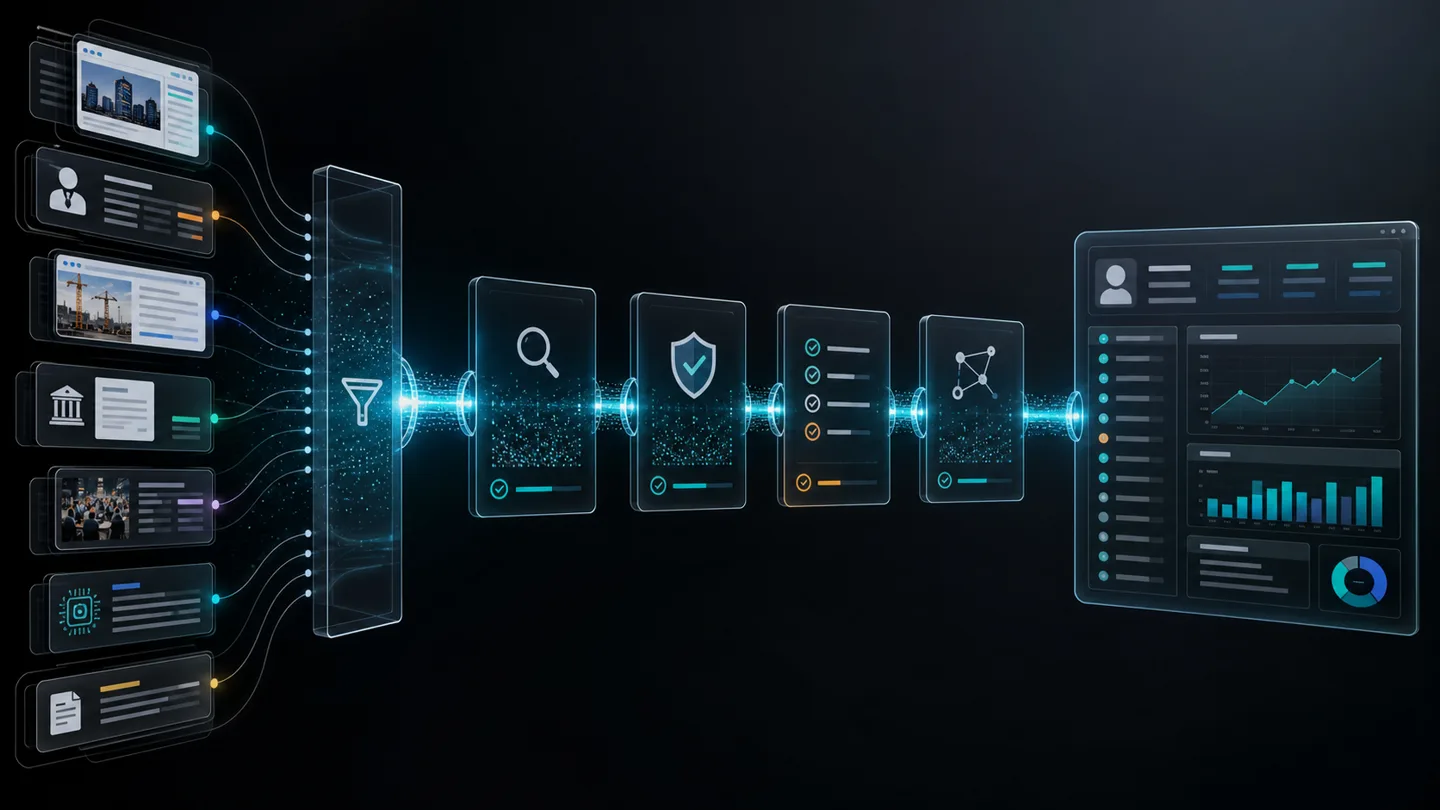
A token accounting contract defines how a route counts input tokens, which tokenizer and revision those counts assume, what happens when the request does not fit, which prompt segments are protected from truncation, and whether the system rejects, reroutes, or trims before work proceeds.
Why this matters now
Enterprise prompts are getting denser, not simpler.
Teams are combining system policy, tool schemas, retrieved evidence, chat history, approval context, and sometimes images or PDFs into one request. At the same time, private AI builders want one client surface across hosted APIs and self-managed inference.
That makes token accounting part of the control plane.
If one route fails closed when the request is too large, another auto-truncates old conversation items, another trims the prompt to a fixed size, and another uses a different tokenizer than last week, you do not have one portable workload lane. You have several distinct lanes with different evidence risk.
In real workflows, that drift shows up as missing citations, lost policy instructions, unexplained latency spikes, broken structured outputs, or review runs that look valid but were generated from incomplete context.
The docs already show why token accounting is a route contract
1. OpenAI treats input-token counting and truncation as explicit API behaviors
The current OpenAI OpenAPI specification exposes a dedicated /responses/input_tokens endpoint that returns an input_tokens count for a request.
The same spec also documents a truncation setting on responses. In auto mode, if the input exceeds the model context window, the model truncates by dropping items from the beginning of the conversation. In disabled mode, which the spec marks as the default, the request fails with a 400 error instead.
That is already enough to show the core issue. Counting is one behavior. Over-limit handling is another. And the auto-truncation direction is not neutral. If the route removes from the beginning, then the oldest state is what disappears first.
2. Anthropic says token counts drive routing and fit, but they are still estimates
Anthropic's current token-counting docs say teams should use token counts to manage rate limits and costs, make model-routing decisions, and fit prompts to a target length.
The same docs say the token-counting endpoint accepts the same structured inputs as message creation, including system prompts, tools, images, and PDFs, and returns the total number of input tokens.
But Anthropic also says the token count is an estimate, that actual input-token usage can differ slightly, and that token counts may include tokens Anthropic adds automatically for system optimizations. The docs further note that newer models use a newer tokenizer and that the same input text can produce approximately 30 percent more tokens than on earlier models.
That is a direct warning against lazy portability assumptions. If counts change by tokenizer generation or system behavior, then a prompt that looked safe on one route may no longer fit the same way on another.
3. TGI separates input truncation from output generation limits
The current Hugging Face Text Generation Inference OpenAPI schema exposes a truncate parameter described as "Truncate inputs tokens to the given size."
That same schema separately documents max_new_tokens as the maximum number of tokens to generate.
That distinction matters. Many teams talk about token limits as if one knob controls everything. It does not. Input fit and output ceiling are different parts of the route contract. A system that shortens inputs and a system that caps outputs are not making the same tradeoff, even if both advertise a similar context window.
4. Transformers shows truncation strategy is a policy choice, not a default law of nature
Hugging Face Transformers makes the design space even clearer. The current padding and truncation docs say the truncation argument can be True or longest_first, only_first, only_second, or do_not_truncate.
Those options are not interchangeable. longest_first removes tokens from the longest sequence in a pair until the prompt fits. only_first trims only the first sequence. only_second trims only the second. And do_not_truncate preserves the full input instead of silently chopping it.
That means truncation policy is part of what the route means. The question is not just whether the request fit. The question is which evidence was allowed to die so that it could fit.
What breaks when token accounting is left implicit
1. System policy gets trimmed without anyone noticing
If a route drops the oldest conversation items or trims the wrong segment, critical policy instructions can disappear while the run still returns a fluent answer.
2. Evidence blocks compete with chat history
In review and retrieval workflows, the useful input is often the evidence payload, not the conversation wrapper around it. Without explicit prioritization, the wrong material survives the fit check.
3. Model routing decisions become fake precision
If one provider counts differently, or a newer tokenizer changes token volume materially, route-selection logic based on stale counts stops being trustworthy.
4. Cost and latency forecasts stop matching production
Forecasts built on one counting path can understate actual work on another route. That creates bad queue policy, poor admission control, and confused expectations around context headroom.
5. Fail-open truncation hides workflow risk
A route that silently trims inputs can look more robust than a route that fails with a 400 error. In reality, the failure may just be less visible.
What a token accounting contract should include
A good token accounting contract does not need to be complicated. It just needs to preserve the decisions that your workflow depends on.
1. Counting method
Define how token counts are produced before execution. Name the route, endpoint, library, or runtime used for preflight counts, and do not assume one count source applies everywhere.
2. Tokenizer identity
Record the tokenizer family and revision that the route assumes. If the tokenizer changes, recount the same workload before treating the route as unchanged.
3. Protected prompt segments
Specify which parts of the prompt must never be truncated silently. Typical protected segments include system policy, tool schemas, evidence excerpts, and current-task instructions.
4. Over-limit behavior
State whether the route rejects, reroutes, segments the task, or truncates automatically. If truncation is allowed, define exactly which segment can lose tokens and in what order.
5. Separate input and output budgets
Keep prompt-fit policy separate from output-ceiling policy. Input truncation, output limits, and completion-state checks solve different problems.
6. Telemetry and audit fields
Log estimated input tokens, actual usage when available, the model route, tokenizer identity, truncation mode, and whether any protected segment was reduced or excluded.
Questions buyers and operators should ask
- How do you count tokens before a request is sent on this exact route?
- Which tokenizer or model revision do those counts assume?
- What happens when the prompt does not fit?
- Does the system fail closed, reroute, or silently truncate?
- If truncation happens, which prompt segment loses tokens first?
- Are system policy and evidence blocks protected from trimming?
- Are input-token budgets and output-token budgets governed separately?
- Do you record when a run was estimated, truncated, rejected, or rerouted for token-fit reasons?
If those answers are vague, the route may still be fine for ad hoc chat. It is not ready to anchor reliable enterprise workflow software.
The commercial takeaway
Token accounting sounds like plumbing until a production workflow drops the wrong context.
Current official docs already show that count, fit, and truncation are not portable defaults. They are explicit behaviors with route-specific consequences.
The teams that get dependable value from private AI will not stop at advertised context windows or OpenAI-compatible payloads. They will define a token accounting contract that binds preflight counting, tokenizer identity, protected prompt segments, truncation policy, and rejection behavior into one inspectable route standard.
That is how you keep a long prompt from becoming a short explanation for why the workflow drifted.
Related reads
- Private AI Needs a Context-Fit Gate: Why Long Context Claims Are Not a Deployment Plan
- Private AI Needs a Chat Template Contract: Why Message Arrays Are Not Enough
- Enterprise AI Needs a Stop-Reason Contract: Why Valid Output Is Not Always a Complete Result
- AI Workflow Services