
Enterprise AI teams keep getting better tooling for long-running work.
OpenAI's current background-mode guide says developers can execute long-running tasks asynchronously, poll response objects to check status over time, and cancel an in-flight response. The same guide also notes that cancelling twice is idempotent.
That is a meaningful product shift. It makes agentic work easier to run outside the fragile request-response loop.
It does not answer the business question that matters most when a live workflow goes sideways:
What exactly happens after you decide to stop it?
If the agent is still thinking, cancellation is usually easy. If it has already opened a case, sent a vendor email, posted a ticket update, or changed a workflow state, stopping compute does not automatically unwind the side effect.
That is why long-running AI agents need a stop policy, not just a cancel button.
Cancellation is a control signal, not a cleanup plan
A lot of enterprise AI designs still blur together three different ideas:
- stop this run now,
- figure out what it already changed,
- undo or compensate for those changes if needed.
Those are related steps. They are not the same step.
AWS Step Functions makes that distinction easy to see. Its current docs say a state machine can retry failed states, catch errors, and that transient issues like network partition events happen in normal workflow execution. Its StopExecution API does exactly what the name says: it stops an execution.
Temporal's current workflow docs show the same pattern from another angle. If an Activity is cancelled, the service records ActivityTaskCancelRequested in Event History, and if the Activity accepts cancellation it records ActivityTaskCanceled. Temporal also says Event History is an append-only log that is durably persisted for recovery and debugging. Its Activity docs add a critical constraint: cancellations are allowed only if the Activity Definition permits heartbeating.
The common lesson is simple. Cancellation is part of workflow control. It is not proof that every downstream side effect has been neutralized.
Why this matters more now
1. Long-running AI work creates more partial-failure states
Once a run can last minutes instead of seconds, more can go wrong between start and finish: dropped connections, worker restarts, human overrides, queue delays, timeout policies, and ambiguous downstream acknowledgments.
2. Tool-using agents turn stop behavior into an operational risk
When an agent can call APIs, submit browser forms, prepare messages, or update systems of record, the stop path matters almost as much as the happy path. A bad answer is annoying. A half-stopped workflow that leaves unclear external state is expensive.
3. Private AI does not remove the problem
Local inference can change privacy, cost, and model control. It does not remove crashes, retries, queue pressure, watchdog restarts, or ambiguous external writes. The model location changes. The stop problem stays.
The dangerous misunderstanding: stop, retry, and compensate are different verbs
Recent enterprise AI architecture has gotten better about retries. That is useful. But stopping a run cleanly requires a different discipline.
Retry asks whether work can be attempted again safely.
Stop asks whether new work can be prevented from happening now.
Compensate asks what the business should do about work that already landed.
Good systems name those boundaries explicitly. Weak systems bury them under a single button labeled cancel.
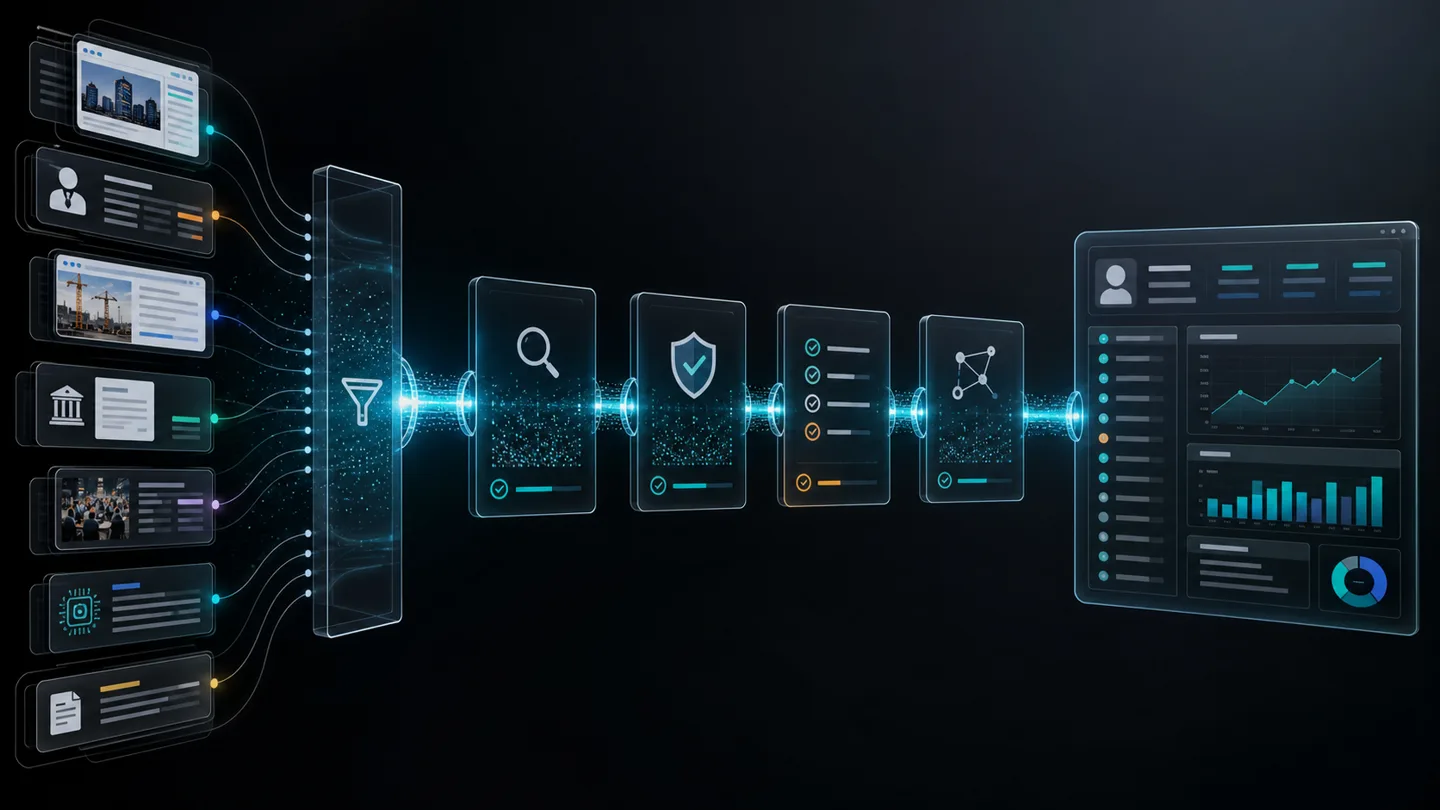
The four-state stop model for enterprise AI
A practical stop policy starts by classifying the run's last known state.
- No side effect yet. The model is still reasoning, extracting, ranking, or preparing output. Cancel the run, record the stop reason, and discard unfinished work.
- Side effect prepared but not committed. The workflow built a payload or staged a mutation but has not fired it. Cancel, mark the prepared action as superseded, and block automatic replay.
- Side effect sent but not confirmed. This is the dangerous zone. Do not assume failure and do not assume success. Reconcile the downstream system first.
- Side effect confirmed. The action landed. Cancellation should stop further work, but any reversal must follow an explicit compensating workflow, not magical rollback assumptions.
This model sounds obvious once written down. Many teams still do not implement it.
The STOP pattern
A simple operating pattern for long-running AI agents is STOP.
S: Signal cancellation broadly
Do not just stop the model loop. Stop dependent workers, browser sessions, queued follow-on tasks, and delayed callbacks tied to the same run identity.
T: Trace the last durable evidence
Record the last confirmed action ID, tool arguments, approval state, downstream response, and timestamp. A stop request without a durable trace creates blind recovery later.
O: Observe downstream systems before retrying
If a consequential action may have been sent, inspect the target system first. Was the ticket created? Did the email leave? Did the procurement request already open? Did the review packet state already advance?
P: Prove final disposition
Every stopped run should end in one of a few explicit states: cancelled cleanly, compensated, escalated for human review, or resumed from a verified checkpoint. If you cannot prove the final disposition, the run is still operationally unresolved.
Questions buyers should ask AI workflow vendors now
- What happens when a user cancels a run after an external action may already have been sent?
- Can the system show the last confirmed action ID, downstream response, and final observed state?
- Which activities can accept cancellation, and what mechanism actually delivers that signal?
- What is the difference between stop, retry, and compensate in this workflow?
- Which actions are irreversible and therefore require human approval before execution?
- What evidence survives after the worker crashes during cancellation or reconciliation?
If the vendor cannot answer those questions, the workflow may still look impressive in a demo. It is not yet ready for consequential operations.
Where VexASI sees this mattering first
Browser and portal agents
Form submissions, ticket comments, procurement portals, and operational dashboards all create side effects that may be hard to reverse. Cancellation needs replayable evidence and downstream reconciliation, not just UI interruption.
Document-heavy review workflows
In AEC review, technical QC, and evidence-bound peer review, most compute steps are safe to stop. Release-state changes, signoff transitions, and outbound client delivery steps are not. Those need explicit stop boundaries.
Supply chain and operations routing
Escalation tickets, supplier notifications, exception queues, and handoff messages can all become duplicate or ambiguous if a stopped run has unclear final state.
The commercial takeaway
The market is getting better at making AI runs longer, more capable, and more stateful.
That is good progress.
But the enterprises that benefit most will not be the ones with the longest-running agents. They will be the ones with the clearest stop behavior.
The winning control is not “can we cancel?”
It is “can we stop, inspect, reconcile, and prove what happened next?”
That is the difference between an AI demo that feels operational and an AI workflow that is actually governable.
Related reads
- AI Agents Need Idempotency Before Autonomy: The Enterprise Guide to Safe Retries
- Resumable AI Workflows Beat Autonomous Agents: The Recovery-First Playbook for Enterprise Automation
- Computer-Use AI Needs Replayable Evidence: The Enterprise Control Layer for Browser Agents
- AI Workflow Services