
The enterprise AI conversation still overweights intelligence and underweights repetition.
Most teams ask whether the model can reason, retrieve, route, or use tools. Fewer ask the uglier production question:
What happens when the exact same action gets attempted twice?
That question matters more now because the major platforms are making longer-running AI execution easier to build.
OpenAI's current background-mode guide says teams can run long-running tasks asynchronously in the background, that background mode helps execute tasks on models like GPT-5.2 and GPT-5.2 Pro reliably, and that developers can poll response objects to check status over time. OpenAI's reasoning guide also says teams can carry reasoning state forward with previous_response_id or by passing prior output items into the next response.
Those are useful capabilities. They make agentic workflows more practical.
They do not make side effects safe.
If a workflow retries after a timeout, worker crash, partial completion, or network partition, the business still needs a way to ensure that the second attempt does not create a second approval, second email, second purchase request, second vendor ticket, or second data mutation.
That is the idempotency problem.
Why idempotency is now an AI issue, not just a workflow-engine issue
For years, workflow systems treated retries as normal.
AWS Step Functions documents explicit retry and catch behavior for workflow errors. Its current error-handling guide says that when a state reports an error, Step Functions defaults to failing the execution, but teams can add retry behavior. The same guide says that on redriven executions, retry attempt counts can reset to 0 for rerun task, parallel, and inline-map states so the system can try again.
Temporal's current docs are even more direct. The platform says Activities should be idempotent, and explains that with retry policies an activity may be executed multiple times even though it is observed as completed exactly once. Its Event History docs also describe a complete and durable log of workflow execution and explain that when a worker crashes, Temporal can replay history and resume from the point of failure.
That is normal orchestrator behavior.
AI agents now sit on top of the same reality. The model may be new. The retry problem is not.
The dangerous misunderstanding: treating model success as action safety
Many AI teams still collapse three different questions into one:
- Did the model produce a plausible next step?
- Did the workflow eventually finish?
- Did every consequential action happen exactly once or in a safely deduplicated way?
Those are not the same question.
An agent can produce a strong answer and still cause bad operational duplication.
Examples show up fast:
- a browser agent submits the same form twice after a timeout,
- a procurement workflow opens duplicate supplier cases,
- a review agent posts the same ticket comment multiple times,
- a local inference worker crashes after an external write but before the completion state is recorded,
- an approval request is retried and the downstream system cannot tell it is the same action.
None of those failures require a hallucination.
They only require a retry without a safe mutation contract.
Why this gets worse as AI workflows become more capable
1. Background execution increases the number of partial-failure states
Long-running agent tasks create more room for disconnects, worker restarts, timeout policies, polling loops, and resumptions. That does not make them bad. It just means the system needs a stronger action ledger.
2. Stateful continuation can preserve reasoning without proving downstream state
Carrying context forward with previous_response_id helps the model continue work. It does not prove whether the external system already accepted the last mutation.
3. Tool use moves failure from text quality to execution quality
Once an agent can call APIs, queue jobs, submit forms, or prepare outbound messages, the real production risk shifts from “bad sentence” to “bad duplicate side effect.”
4. Private AI does not remove the problem
Open-weight or local inference stacks still hit worker crashes, timeouts, queue pressure, and restart logic. Running the model on your own hardware may improve privacy or cost control. It does not magically create exactly-once business behavior.
The practical distinction: retry-safe compute versus retry-safe action
Most AI steps are cheap to retry.
- reformat a draft,
- rerun extraction on a page,
- re-score a route,
- rebuild a structured payload,
- re-summarize retrieved evidence.
Those are compute retries.
Consequential actions are different:
- create a ticket,
- write into a system of record,
- send an external message,
- submit a regulatory or operational packet,
- change workflow state for another team.
Those are mutation retries.
The enterprise control move is simple: do not treat mutation retries like compute retries.
Compute can usually be rerun. Mutations need stable identity, state checks, and deduplication.
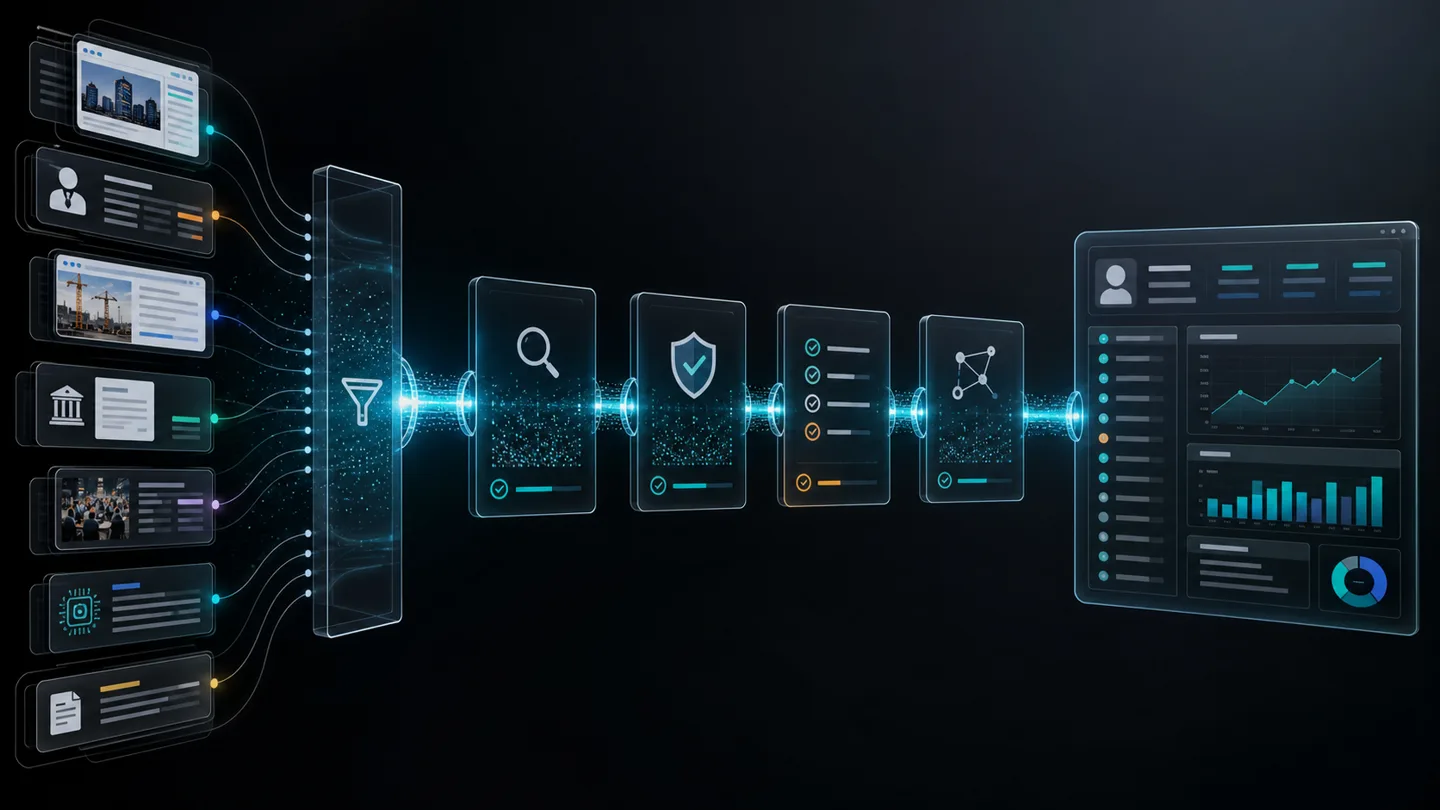
The IDEMP pattern for enterprise AI retries
A useful operating model is IDEMP.
I: Identify the exact mutation boundary
Separate analysis from action. Name the specific step that changes external state. “Run the agent” is not a useful retry boundary. “Create supplier escalation ticket” is.
D: Deduplicate with stable operation IDs
Every consequential action should carry a durable action key or idempotency key that survives retries. If the same step is replayed, the downstream system should recognize it as the same intent, not a new request.
E: Externalize preconditions and postconditions
Before retrying, record what had to be true before the action and what proves success afterward. Did the case already exist? Was the email already sent? Did the target record already move to the requested state?
M: Move irreversible actions behind explicit gates
If a step affects cost, commitments, customers, or regulated work, require a visible approval or release gate close to the mutation. That keeps retries from silently escalating into business consequences.
P: Preserve evidence for replay and review
Keep the action ID, tool arguments, downstream response, timestamps, approval record, and final observed state. If a workflow resumes later, another human should be able to tell whether the system needs to retry, skip, or escalate.
Questions technical buyers should ask right now
- What steps in this AI workflow can safely run more than once?
- Which steps are protected by idempotency keys or equivalent deduplication logic?
- How does the system distinguish “model continuation” from “external mutation already succeeded”?
- What evidence survives after a worker crash or timeout?
- Can a reviewer see the exact action ID, tool payload, downstream response, and final state check?
- Which actions are forced through approval before execution?
- What is the documented behavior if the same run is replayed tomorrow?
If the answer is vague, the workflow may still be impressive. It is not yet trustworthy.
Where VexASI sees this mattering first
Document-heavy review pipelines
Retrying extraction or comparison is usually fine. Retrying a release-state change, signoff event, or outbound delivery without an operation key is not.
Agentic operations workflows
Supply chain, AEC, procurement, and operations teams increasingly want AI to move from analysis into routing and action. That makes duplicate side effects more expensive than duplicate paragraphs.
Private AI stacks
Local inference often increases the need for restart-aware design because queues, VRAM limits, watchdogs, and manual recovery steps can all trigger retries. Private hosting changes the control boundary, not the retry math.
The commercial takeaway
The next wave of AI platforms will keep making reasoning, state, tool use, and background execution easier.
That is good news for builders.
But easier orchestration does not remove the oldest production question in distributed systems: if the system tries again, what stops it from doing the wrong thing twice?
That is why idempotency belongs in enterprise AI architecture, procurement reviews, and workflow design standards right now.
The winning teams will not just have better models.
They will have clear mutation boundaries, stable action IDs, replayable evidence, and approval-aware retries.
That is how AI agents become operational systems instead of polished sources of duplicate work.
Related reads
- Resumable AI Workflows Beat Autonomous Agents: The Recovery-First Playbook for Enterprise Automation
- Reasoning Summaries Are Not Audit Logs: The Evidence Standard for Enterprise AI
- Structured Outputs Are Becoming the Control Layer for Enterprise AI
- AI Workflow Services