
Enterprise AI is getting better support for long-running work.
That is useful. It also creates a new class of operational ambiguity.
OpenAI's current background-mode guide says teams can run responses asynchronously, poll status over time, cancel an in-flight response, and even resume streaming with starting_after. The current MCP transport specification says a disconnection should not be interpreted as cancellation, that cancellation should be explicit, and that streamable HTTP can support resumability and redelivery. The same spec also says the server can accept input with HTTP 202 Accepted before the real work reaches final state.
Those are all sensible protocol behaviors.
They also mean one thing very clearly: connection state, protocol state, and business state are no longer the same thing.
That is why enterprise AI needs run-state reconciliation.
Run-state reconciliation is the control layer that answers the question a transport cannot answer on its own: after a disconnect, retry, cancel request, timeout, or accepted-but-not-finished response, what state is the workflow actually in, what already happened, and what should happen next?
Why this matters now
Modern AI workflows are no longer one blocking request and one final answer.
They are increasingly:
- long-running background responses,
- streamed events that may be resumed later,
- tool-using runs that can cross multiple systems,
- browser or remote-tool steps that outlive one client session,
- and hybrid routes where the same workflow can pause, retry, escalate, or reroute under load.
That makes protocol semantics more visible and more important.
But it also exposes a common mistake: teams treat transport events like outcome proof.
They assume:
- 202 Accepted means the workflow is safely underway,
- a disconnect means nothing happened,
- a cancel request means the work definitely stopped,
- or a resumed stream means the run can continue without re-checking downstream state.
Those assumptions get expensive fast once AI touches real systems.
What the current docs already tell us
The primary sources line up surprisingly well.
- OpenAI background mode: long-running responses can execute asynchronously, be polled for status, be cancelled, and have streaming resumed later.
- MCP transports: disconnects should not be treated as cancellation, cancellation should be explicit, and resumability plus redelivery are normal transport concerns.
- MCP transports again: servers may return 202 Accepted when they accept an input before later JSON-RPC completion semantics settle.
- AWS Step Functions: retries and catch/fallback behavior are explicit because accepted work and successful work are not the same thing.
- Temporal retry policy: repeated attempts are controlled because resumable execution still needs workflow discipline.
Put together, those sources show the real production issue.
Asynchronous AI makes it easier to keep work alive across interruptions. It does not remove the need to reconcile the truth of the run afterward.
The gap between protocol truth and workflow truth
A protocol can tell you many useful things:
- the request was accepted,
- the stream disconnected,
- a cancel endpoint was called,
- the client resumed at event 42,
- or the server says the response is still in progress.
Those are important signals. They are not the full business answer.
A workflow still has to answer questions like:
- Did any downstream tool call already mutate state?
- Did the target system receive one action, multiple actions, or none?
- Did the approval window expire while the run was disconnected?
- Did the tool inventory or schema change before the resumed step?
- Is it safe to retry, safe to resume, or safer to stop and escalate?
That is the reconciliation problem.
Without a separate reconciliation layer, teams start guessing from logs, transport codes, and half-complete UI traces. That is not reliability. It is archaeology.
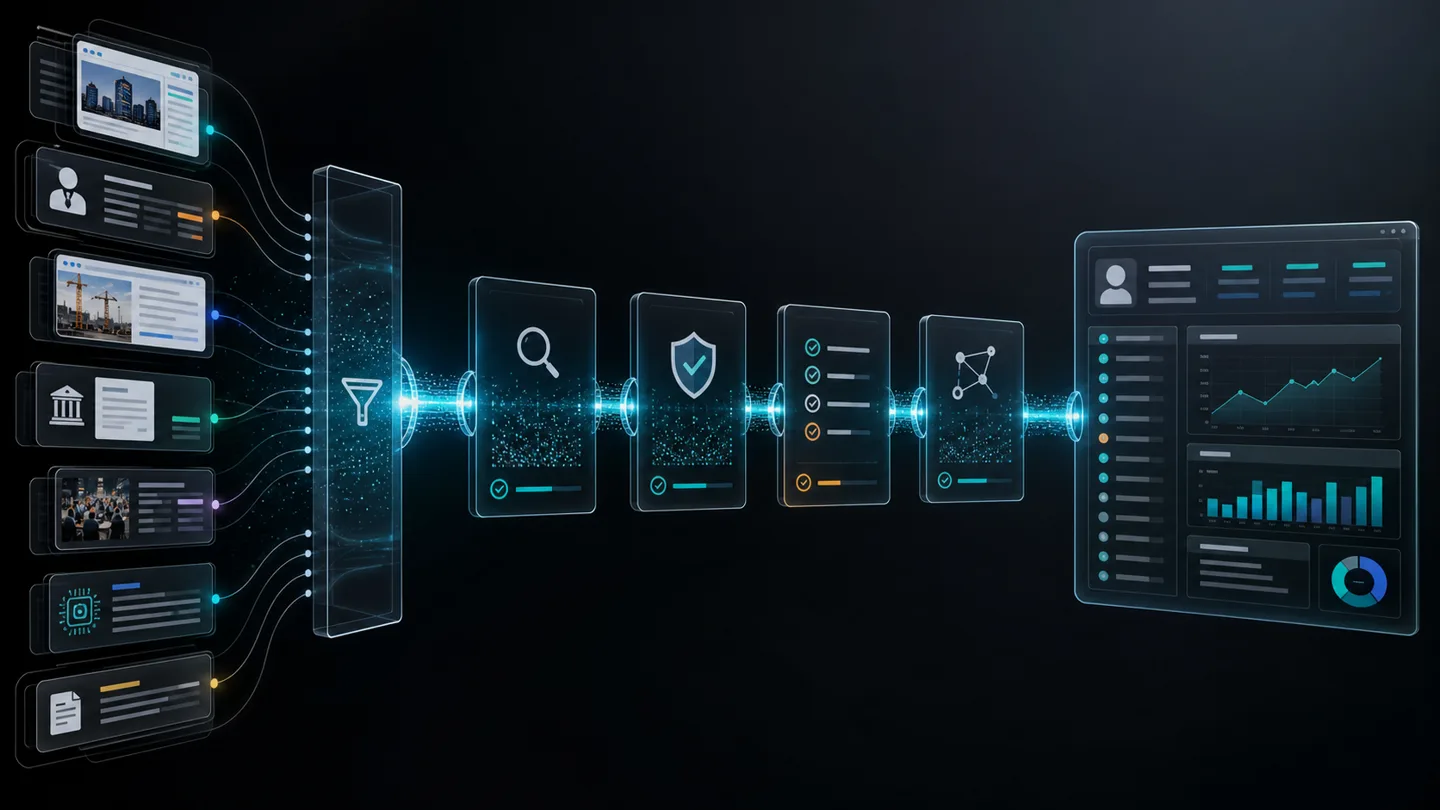
The RECON framework for run-state reconciliation
A practical enterprise pattern is RECON.
R: Request identity
Every long-running AI run needs a durable identity that survives polling, reconnects, retries, and human investigation. That identity should bind together the workflow route, model path, tool scope, approval scope, and evidence version that were active when the run started.
E: Execution history
Store the action history, not just the latest status. Which tool calls already happened? Which side-effect checks ran? Which retries were attempted? Which stream event was last confirmed? A status label without execution history is too thin for recovery.
C: Consequence check
Before a resumed or retried run continues, confirm whether any consequential state may already have changed. This is where reconciliation meets postcondition checks and idempotency. If the workflow cannot tell whether a mutation landed, it should not continue optimistically.
O: Outcome proof
Do not stop at protocol completion. Prove the business outcome or prove that it remains unresolved. "Completed" at the API layer is weaker than "the target record changed as approved" or "no downstream mutation occurred."
N: Next-owner decision
Every ambiguous run needs a next-owner rule. Resume automatically, retry narrowly, reroute to a fallback lane, send to a reviewed recovery queue, or close the run as cancelled. Ambiguity should end in a named action, not in generic logs.
Where teams get burned
They retry because the client disconnected
MCP explicitly warns that disconnection should not be interpreted as cancellation. If a team treats every dropped connection like a failed run and resubmits work immediately, duplicate side effects become much more likely.
They treat 202 Accepted like outcome evidence
An accepted request may simply mean the system took responsibility for processing. It does not prove the work reached a safe, valid, or approved terminal state.
They call cancel and assume the system is clean
OpenAI's current docs make cancellation available and note that cancelling twice is idempotent. That is useful API behavior. It still does not prove that downstream business actions were never started or never partially completed.
They resume the stream but skip downstream checks
Being able to continue event consumption is not the same thing as proving the workflow can continue unchanged. Approval windows, credentials, schemas, evidence freshness, or target-system state may have shifted while the transport recovered.
They store status labels instead of recovery evidence
"In progress," "failed," and "cancelled" are not enough for production investigation. Operators need route identity, event offsets, tool history, target checks, and escalation rules if the workflow is supposed to be recoverable.
Where run-state reconciliation matters first
Tool-rich agent workflows
Once an AI run can touch CRM, ERP, ticketing, procurement, browser, or file systems, ambiguous state becomes an operations issue, not just an SDK issue.
Browser and computer-use automation
UI state changes, redirects, session expiry, and human checkpoints make transport ambiguity even more dangerous. A lost connection tells you almost nothing about what the browser already did.
Private and hybrid AI routing
If a workflow can move between local inference and hosted fallbacks, the reconciliation layer has to prove which route actually executed the consequential step and whether a retry would repeat it or safely continue it.
A/E, document, and evidence-sensitive review work
In review-heavy workflows, a resumed run may still need evidence freshness checks, page-citation validation, or release-gate confirmation before it can be treated as finished. Protocol recovery alone is too shallow.

Questions buyers and operators should ask now
- What exact identifier ties together retries, reconnects, streaming resumes, and downstream actions for one run?
- Can the platform prove whether a disconnect happened before or after a consequential tool action?
- What is checked before a cancelled or resumed run is allowed to continue?
- Does 202 Accepted trigger a separate reconciliation path before the workflow is treated as complete?
- How are approval scope, credential leases, and evidence freshness re-validated after an interruption?
- Can operators see the last confirmed event offset, tool history, and downstream state checks in one record?
- When ambiguity remains, does the run move into a reviewed recovery lane or keep retrying automatically?
If those answers are vague, the workflow probably has asynchronous capability without asynchronous governance.
The commercial takeaway
Long-running AI execution is becoming normal.
That is good for capability, but it raises the cost of sloppy state assumptions.
The teams that win will not just add background mode, streaming resumes, or resumable transports to their stack. They will add a clearer rule for what those signals mean operationally and how business truth gets reconciled before the next action runs.
In practice, that means:
- stable run identities,
- visible execution history,
- consequence checks before retries or resumes,
- outcome proof beyond transport status,
- and explicit next-owner routing when the run becomes ambiguous.
That is the difference between an asynchronous AI feature and a governed enterprise workflow.
Related reads
- AI Agents Need Dead-Letter Queues
- Tool Calls Are Not Outcomes
- Long-Running AI Agents Need a Stop Policy
- AI Agents Need Idempotency Before Autonomy