
Streaming is becoming the default interface for AI products.
That creates a tempting shortcut in private AI programs. If the route can stream tokens to the screen, teams assume the interface is stable enough for copilots, operators, and agent controllers.
That assumption is too weak.
Current docs from OpenAI, Anthropic, and Hugging Face Text Generation Inference point to the same operational reality. Streaming is an event contract, not just a faster transport for text.
That contract decides which event types appear, what counts as completion, how heartbeats and errors surface, and whether downstream systems are allowed to react to partial output before the run is actually done.
That is why private AI needs a streaming contract.
A streaming contract defines the approved event vocabulary for a route, the terminal completion signal, heartbeat behavior, error translation, reconnect policy, and whether partial output is display-only or eligible to influence workflow state.
Why this matters now
AI teams are no longer streaming only into chat bubbles.
They are streaming into review consoles, browser copilots, agent dashboards, and workflow adapters that may parse structured text, display progressive reasoning summaries, or trigger follow-up actions after a response finishes.
That makes event semantics part of the product.
If one route emits explicit completion events, another emits content-block deltas, and a third behaves like a token iterator over SSE, a shared UI or automation layer can drift long before model quality becomes the main problem.
In other words, route compatibility is not just about prompts and JSON payloads anymore. It is also about the shape of time.
The docs already show why streaming is a route contract
1. OpenAI documents streaming as a multi-event response surface
OpenAI’s current streaming guide says the API uses server-sent events and that some events are emitted only once while others are emitted multiple times as the response is generated.
The guide names common text-stream events such as response.created, response.output_text.delta, response.completed, and error.
That matters because the stream is already more than a sequence of tokens. A client needs to know which events are informational, which ones carry user-visible output, and which one marks the run as truly done.
2. Anthropic exposes an explicit event flow, heartbeat events, and versioning guidance
Anthropic’s current streaming docs describe a named event flow: message_start, content-block start and delta events, one or more message_delta events, and a final message_stop event.
The same docs say streams may include ping events, may surface errors inside the event stream, and that clients should handle unknown event types gracefully because new events may be added over time.
That is a strong signal for enterprise builders. The contract is not just “read until the socket closes.” The contract includes heartbeat handling, forward-compatible parsing, and a stable rule for when to finalize downstream state.
3. TGI documents a simpler token-streaming lane built on the same transport
Hugging Face TGI’s current streaming docs show SDK usage through textGenerationStream(), yielding generated token text as it arrives.
The docs also explain that TGI uses Server-Sent Events under the hood and that SSE is unidirectional: the client opens the connection and the server keeps sending updates.
That is useful, but it is a different behavior surface than a richer semantic event model. If one route streams named lifecycle events and another behaves mostly like a token iterator, the adapter above them needs explicit rules instead of assumptions.
4. “OpenAI-compatible” does not erase downstream event differences
Many private AI teams now standardize around OpenAI-shaped request payloads because they reduce integration friction.
That helps on the request side. It does not automatically normalize the streaming side.
Current provider and serving docs already show meaningful variation in event names, event ordering, heartbeat behavior, and how much semantic structure is exposed during a live response. If the client stack treats all of those routes as interchangeable, the breakage may show up in progress bars, structured parsers, cancel buttons, or agent handoff logic rather than in plain text quality.
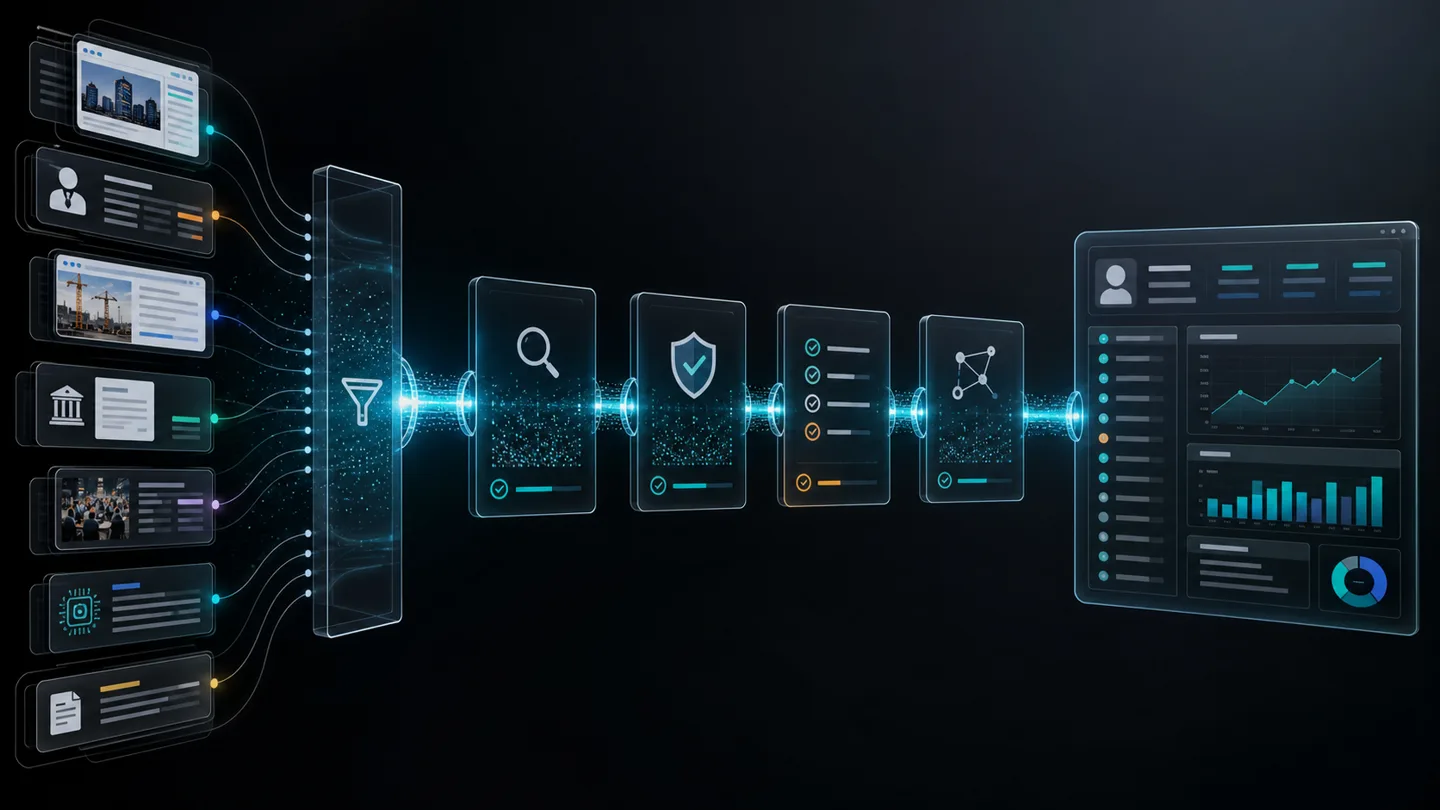
What a streaming contract should include
A useful streaming contract can stay compact. It just needs to preserve the behavior that the UI, parser, and workflow layer actually depend on.
1. Event vocabulary
List the approved event types for the route. Distinguish user-visible deltas, lifecycle markers, heartbeat events, and error events.
2. Terminal completion rule
Define what counts as done. It may be a named completion event, a terminal message event, or an adapter-specific end-of-stream rule. Do not let different clients guess differently.
3. Partial-output safety policy
State whether partial output is display-only or whether any subsystem may parse, score, or route based on incomplete text. In most enterprise lanes, partial output should not mutate workflow state.
4. Heartbeat and timeout handling
Document what to do with ping events, long quiet periods, and transport interruptions. A silent stream is not always a failed run, and an interrupted connection is not always a cancelled task.
5. Error normalization
Map route-specific stream errors into a stable internal error model. The UI and recovery layer should not need one branch per vendor or server.
6. Reconnect and replay policy
Define whether reconnect resumes the same run, restarts it, or requires an explicit state check before replay. Streaming UX often fails when transport recovery is confused with workflow recovery.
Questions buyers and operators should ask
- Which stream event types are stable and supported on this route today?
- What exact signal marks a response as complete?
- Can the stream emit heartbeat or ping events, and how should clients treat them?
- How are stream-time errors surfaced and normalized?
- Is partial output display-only, or can anything downstream act on it?
- What happens when the transport drops mid-stream?
- Will the client handle unknown future event types safely?
If those answers are vague, the route may be fine for demos and brittle for real workflow software.
The commercial takeaway
Streaming is no longer just a UX flourish.
It is part of the operating contract between the model route and every tool that sits above it.
The teams that get durable value from private AI will not stop at “supports SSE” or “looks OpenAI-compatible.” They will define a streaming contract that covers event names, completion, heartbeats, errors, and partial-output boundaries before those streams touch real work.
That is how a fast demo becomes a dependable interface.
Related reads
- OpenAI-Compatible Isn’t Agent-Compatible: The Protocol Checklist Every Private AI Stack Needs Before You Automate
- Enterprise AI Needs a Stop-Reason Contract: Why Valid Output Is Not Always a Complete Result
- Disconnects Are Not Cancellations: Why Enterprise AI Needs Run-State Reconciliation
- AI Workflow Services