
Most private AI teams benchmark the wrong moment.
They measure token speed after the model is already loaded, the process is already healthy, the cache is already warm, and the GPU already belongs to that route. Then they present the result as if it defines the production experience.
It does not.
The real production question is simpler: what happens when the route is cold?
That is why private AI needs a cold-start contract.
A cold-start contract defines how long a route can take to wake up, which requests are allowed to wait, which routes must stay warm, which failures are acceptable during initialization, and what fallback path is used when the route is not ready yet.
Why this matters now
Private AI is moving into a more elastic operating model.
Teams now mix autoscaled managed endpoints, shared GPU nodes, local developer inference, wake-and-sleep serving stacks, browser agents, background jobs, and route-specific cost controls. That is good for utilization. It also means the same model can behave like different products depending on whether it is warm, waking, or unloaded.
If that state is left implicit, buyers see one latency story, operators see another, and users discover the truth by hitting the route at the wrong time.
The docs already show that cold state is part of the product
1. Scale-to-zero saves cost by changing startup behavior
Hugging Face’s current Inference Endpoints autoscaling guide says scale to zero makes an endpoint go idle after a period of inactivity, 1 hour by default. The same guide says scale-to-zero implies a cold start period on the next request, that the proxy returns 503 while the new replica is initializing, and that scaling from 0 to 1 based on a request is typically not recommended if your application needs to be responsive.
That is not a minor implementation detail. That is route identity.
A lane that can return immediately when warm but may spend minutes waking a replica is not the same product as a permanently warm interactive lane. It might still be the right architecture. It just needs to be described honestly.
2. Local inference stacks already expose keep-alive policy as a control surface
Ollama’s current API docs make this explicit. The chat API documents a keep_alive field for model keep-alive duration, with examples such as 5m or 0 to unload immediately. The same docs also show response fields such as total_duration and load_duration.
That means warm-versus-cold behavior is already observable and configurable in mainstream local inference tooling.
If a route unloads after every call, first-token experience, concurrency behavior, and GPU contention look very different from a route that stays resident. The contract is not just “we run locally.” The contract is also how long we stay ready.
3. Sleep and wake behavior can change the route without a full teardown
vLLM’s current sleep mode docs make the same point from another angle. They say sleep mode can offload model weights to CPU RAM and discard KV cache, releasing up to 90%+ of GPU memory. They also describe fast resume that can wake up the engine and resume inference without full model reload.
The details matter.
vLLM says Level 1 sleep offloads model weights and discards KV cache, while Level 2 sleep discards both model weights and KV cache. Those are useful operating options, especially when GPUs are shared across training, evaluation, and serving. They also mean that “the server is up” does not always mean “the route is ready in the same way it was five minutes ago.”
4. Readiness and startup are different checks for a reason
Kubernetes documents this clearly. Its current probe guidance says startup probes verify whether the application within a container is started, and that if a startup probe is configured, Kubernetes does not execute liveness or readiness probes until the startup probe succeeds. The same page says readiness probes determine when a container is ready to accept traffic, which is useful while loading files or warming caches.
That distinction matters for AI serving.
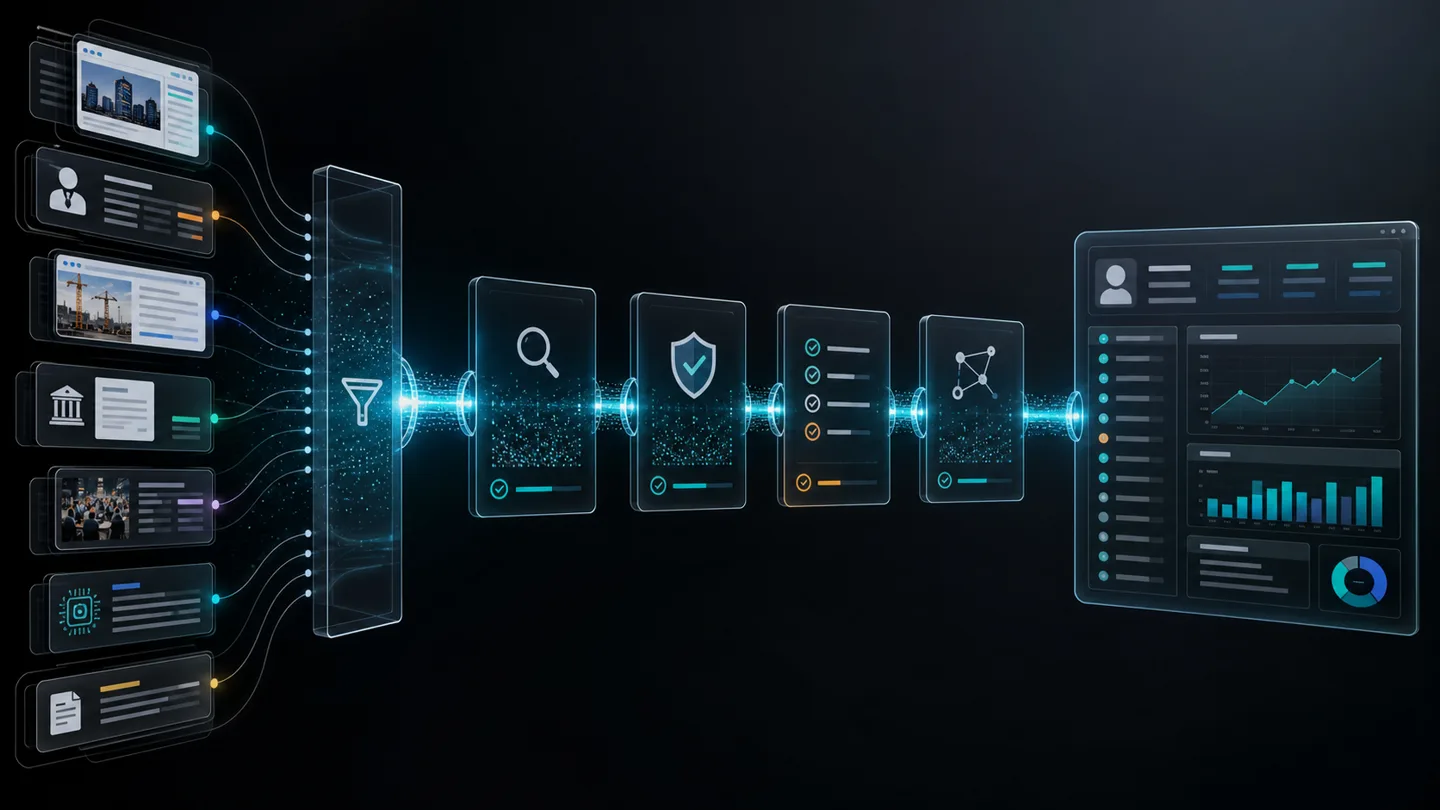
A model process can be alive while weights are still loading, caches are still cold, or downstream health checks have not settled. If the route advertises readiness too early, users hit a half-booted product. If the route hides behind startup forever, interactive users time out without explanation. A cold-start contract decides what “ready” actually means.
5. Some work should move to asynchronous lanes instead of pretending to be interactive
OpenAI’s current background mode guide says reasoning models can take several minutes on complex tasks and that background mode lets developers execute long-running tasks asynchronously and poll response objects to check status over time.
That is a useful pattern even for private AI teams running their own serving stack.
If a route cannot honestly meet an interactive warm-start expectation, the answer may be to move some requests into a background or batch lane instead of hiding the wake-up cost behind retries, spinners, or accidental 503 storms.
What breaks when teams skip the cold-start contract
1. Demo latency gets mistaken for production latency
Warm-path benchmarks make the route look settled even when user traffic regularly lands on unloaded or waking infrastructure.
2. Autoscaling quietly changes the product promise
Cost optimization is good. But a route that can sleep to zero is making a different promise than a route that guarantees low-latency first response. Procurement, UX, and workflow design need to know which promise applies.
3. Health checks lie
A green process or open port does not prove the route is ready for a 200-page PDF, a browser-agent plan, or a latency-sensitive operator workflow.
4. Shared GPU reclamation becomes invisible risk
Sleep modes, unloading, and aggressive keep-alive settings are often introduced for good reasons. Without a written policy, though, users and orchestrators discover the behavior only after a miss.
5. Retry logic amplifies cold-state pain
If clients or agents interpret every initialization miss as a generic failure, they can create duplicate traffic exactly when the route is least able to handle it.
What a cold-start contract should include
1. Route classes
Separate interactive, background, batch, and review-heavy routes. Not every lane deserves the same warm-pool policy or first-response promise.
2. Warm-state policy
Document minimum warm replicas, allowed scale-to-zero behavior, keep-alive duration, sleep levels, and when the platform is allowed to unload the route.
3. Admission behavior during initialization
State whether requests should fail fast, wait with a timeout, queue, reroute, or switch into asynchronous handling while the route initializes.
4. Readiness definition
Define what counts as ready: process booted, weights loaded, cache warmed, dependent services reachable, and route-specific health checks passed.
5. Fallback lane
Specify what happens when the route is cold and the request cannot wait. That might mean a smaller always-warm model, a read-only degraded path, or a background lane with explicit status tracking.
6. Evidence and telemetry
Record initialization failures, load_duration, wake frequency, first-token latency after idle periods, and how often the system had to reroute because the route was not ready.
7. User-visible expectations
Make the behavior legible. A cold route should not pretend to be broken if it is only waking. A background route should not pretend to be interactive if it is built for polling.
Questions buyers and operators should ask
- Can this route scale to zero, sleep, or unload, and under what conditions?
- What is the expected first-response latency after idle time, not just steady-state token speed?
- What exact checks must pass before the route is considered ready for live traffic?
- Does the platform expose metrics such as load duration, wake frequency, or cold-start error rate?
- Which workflows are allowed to wait for initialization, and which must reroute immediately?
- What fallback lane is used when the primary private AI route is not warm enough for the request?
- Can the team prove that the latency promise shown in demos includes cold-state behavior?
The commercial takeaway
Private AI is no longer just a model-hosting decision. It is a route-design decision.
Current primary-source docs already show the shape of the problem. Scale-to-zero can trade cost for cold-start delay. Local inference stacks expose keep-alive and load duration. Serving engines can sleep and wake without full teardown. Orchestrators separate startup from readiness. Background lanes exist because some tasks should not pretend to be interactive at all.
That means cold state is not a corner case. It is part of the product contract.
The teams that deploy private AI well will stop asking only, “How fast is the model?” and start asking, “What exact promise does this route make on the first request after idle time?”
That is the question that keeps architecture, finance, platform engineering, and end users aligned before the route reaches production traffic.
Related reads
- Private AI Needs SLOs: Why Local Inference Is an Operations System
- Private AI Needs a Scheduler Contract: Why Batching Policy Is Part of the Product
- Private AI Needs a Session-Affinity Contract: Why Warm Routes Break Behind Generic Load Balancers
- AI Workflow Services