
Private AI teams often talk about route identity as if it stops at the model name, revision, quantization format, and endpoint.
That is incomplete.
If the exact same model starts producing much slower first-token latency for interactive users, starts favoring long document runs over short chats, or begins rejecting requests earlier under load, the business experiences that as a product change even if the weights never moved.
That is why private AI needs a scheduler contract.
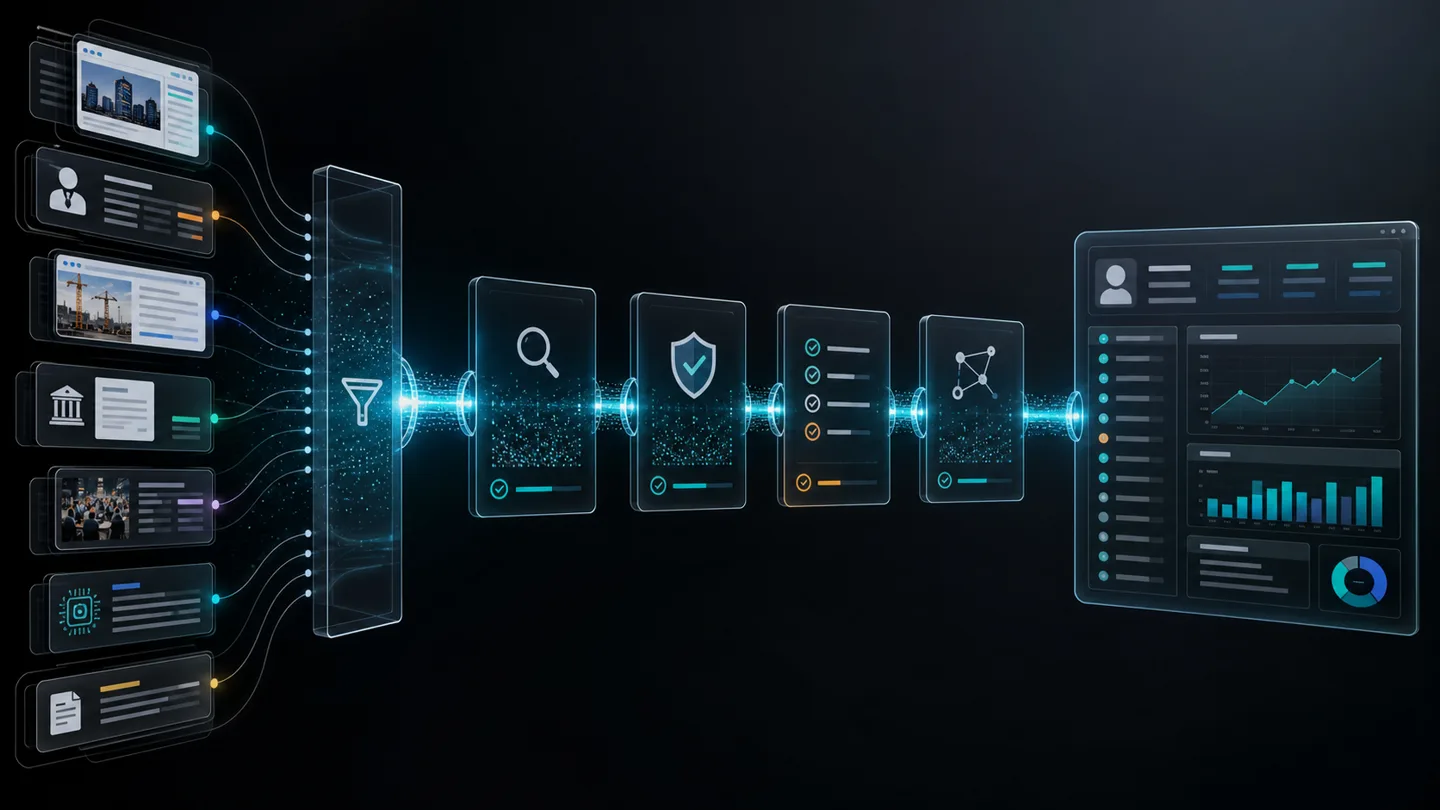
A scheduler contract defines how a route batches work, how it treats long and short requests, when it pauses active decoding to admit waiting jobs, and when it refuses additional load instead of letting queues quietly degrade.
Why this matters now
The current primary-source serving docs already expose the relevant control surface.
vLLM's current engine and optimization docs document scheduler choices such as --max-num-batched-tokens, --max-num-seqs, --scheduling-policy, and chunked-prefill controls. The docs also say chunked prefill is enabled by default whenever possible in V1, that decode requests are prioritized, and that smaller max_num_batched_tokens values can improve inter-token latency while higher values improve time to first token and throughput.
Hugging Face Text Generation Inference exposes a parallel set of decisions: MAX_BATCH_TOTAL_TOKENS, MAX_BATCH_PREFILL_TOKENS, WAITING_SERVED_RATIO, MAX_WAITING_TOKENS, and MAX_CONCURRENT_REQUESTS. The launcher docs explicitly describe these as controls for hardware usage, prefill pressure, batching tradeoffs, and backpressure.
Put plainly, modern private AI serving stacks already treat scheduling as a first-class runtime behavior. Enterprise teams should treat it that way too.
The docs already show why scheduler settings are product behavior
The operational lesson is not subtle. These controls decide what kind of service users actually experience.
1. Token budgets define the shape of the route
vLLM's engine-args docs say --max-num-batched-tokens is the maximum number of tokens that can be processed in a single iteration. The same page defines --max-num-seqs as the maximum number of sequences processed in a single iteration.
TGI's launcher docs describe --max-batch-total-tokens as a critical control for maximum hardware usage, and explain that it governs the total amount of potential tokens within a batch.
Those are not cosmetic tuning flags. They influence how much work the route admits into each scheduling step and how aggressively it turns memory and compute headroom into concurrency.
If those limits change, the route has changed.
2. Prefill policy decides who pays the latency bill
vLLM's current optimization docs say chunked prefill processes large prefills in smaller chunks and batches them with decode requests. In V1, the docs say chunked prefill is enabled by default whenever possible and that decode requests are prioritized before pending prefills. The same page says smaller max_num_batched_tokens values, such as 2048, can achieve better inter-token latency, while higher values can improve time to first token and throughput.
TGI's launcher docs make the same tradeoff visible from another angle. --max-batch-prefill-tokens limits prefill work because prefill is the most memory-intensive and compute-bound operation.
That means the same model can feel like an interactive assistant in one scheduler configuration and a batch-oriented review engine in another.
3. Long prompts and short requests do not compete neutrally
vLLM's scheduler config docs expose --max-num-partial-prefills, --max-long-partial-prefills, and --long-prefill-token-threshold. The docs explicitly say that setting max_long_partial_prefills lower than max_num_partial_prefills can allow shorter prompts to jump the queue ahead of longer prompts in some cases, improving latency.
TGI documents similar queue-shaping behavior with --waiting-served-ratio and --max-waiting-tokens. Its docs explain that new waiting queries may cause the system to pause running queries for a prefill pass so those waiting jobs can join the batch, and that values that are too small or too large can each degrade service in different ways.
That is a policy choice, not a neutral property of the model.
4. Fairness is configurable, not automatic
vLLM's current docs say --scheduling-policy supports fcfs and priority. The docs define fcfs as first come, first served and priority as handling requests based on the given priority with arrival time breaking ties.
Once that option exists, the enterprise question becomes obvious: who is allowed to set priority, for which workflows, and with what evidence?
A route that lets urgent review jobs jump ahead of background summarization may be correct for the business. But it should be explicit, documented, and reviewable.
5. Backpressure is part of the product promise
TGI's launcher docs describe --max-concurrent-requests as a way to refuse client requests instead of letting them wait too long, and say that a low limit is often good for handling backpressure correctly.
That is the right mindset.
A private AI route should not pretend infinite elasticity. It should have an admission policy. Some teams will prefer queueing. Others will prefer fast refusal with a fallback lane or retry signal. Either way, the behavior needs to be deliberate.
What a scheduler contract should include
A useful scheduler contract can stay compact. It just has to preserve the real behavior surface.
1. Lane intent
State whether the route is optimized for interactive chat, long-document review, batch extraction, or agentic orchestration. One scheduler rarely fits all four well.
2. Batch and token ceilings
Record the effective token and sequence budgets that define how much work the scheduler can admit per iteration or batch.
3. Prefill policy
Record whether chunked prefill is enabled, how large prefills are treated, and what tradeoff the team chose between time to first token, inter-token latency, and raw throughput.
4. Fairness and priority rules
Record whether the route uses first-come, first-served or explicit priority, who can assign priority, and which workloads are allowed to jump ahead.
5. Backpressure behavior
Record when the service queues, when it sheds load, and which fallback or retry path clients should use when the lane is full.
6. Validation and rollback evidence
Bind scheduler changes to latency, throughput, and workload-mix tests that reflect the real route. If a scheduler policy regresses interactive use or destabilizes review throughput, the team needs a rollback-ready prior configuration.
Questions technical buyers and operators should ask
- What workload is this route optimized for: chat, batch review, document-heavy extraction, or agents?
- Which settings define token budget, prefill behavior, and concurrency for this lane?
- Can long prompts cause short interactive requests to wait, and if so, under what rule?
- Does the route use first-come scheduling or explicit priorities?
- What happens under pressure: queue, reject, downgrade, or reroute?
- Are scheduler changes versioned and validated like other release changes?
If those answers are vague, the model may be stable while the user experience is not.
Why the governance angle matters
NIST's AI Risk Management Framework says it is meant to improve the ability to incorporate trustworthiness considerations into the design, development, use, and evaluation of AI systems.
Scheduler policy belongs inside that scope.
If teams only track model weights and ignore batching, fairness, and backpressure policy, they leave a meaningful part of production behavior outside the release record. That makes incident review weaker, benchmarking less representative, and operational promises harder to defend.
The commercial takeaway
Private AI value does not come from model access alone. It comes from repeatable behavior under real workload mix.
The teams that get durable results from local and open-weight inference will not treat the scheduler as an invisible implementation detail. They will define a scheduler contract that captures batch ceilings, prefill policy, fairness rules, priority use, and backpressure behavior as part of the production route.
That is how a technically impressive model endpoint becomes a dependable business system.
Related reads
- Private AI Needs Queue Classes: Why Chat, Batch, and Agent Runs Should Not Share One Inference Lane
- Private AI Needs SLOs: Why Local Inference Is an Operations System
- Private AI Needs Admission Control: The Queue Policy Behind Reliable Local Inference
- AI Workflow Services