PDF-capable AI is no longer a niche demo.
OpenAI's current File inputs guide has dedicated sections for PDF files, PDF image and chart limitations, and PDF detail levels. Anthropic's current PDF support docs say Claude can extract text, analyze charts, and understand visual content from documents, while also warning that large PDFs can fail before the page limit and that some visual PDF understanding paths require citations. vLLM's current Multimodal Inputs docs show the same trend on the self-hosted side: multimodal handling is now a documented serving concern, not an edge case.
That is real progress.
It also creates a familiar enterprise mistake: teams see that a model can read a PDF, then assume the output is ready for review, approval, or release.
Usually it is not.
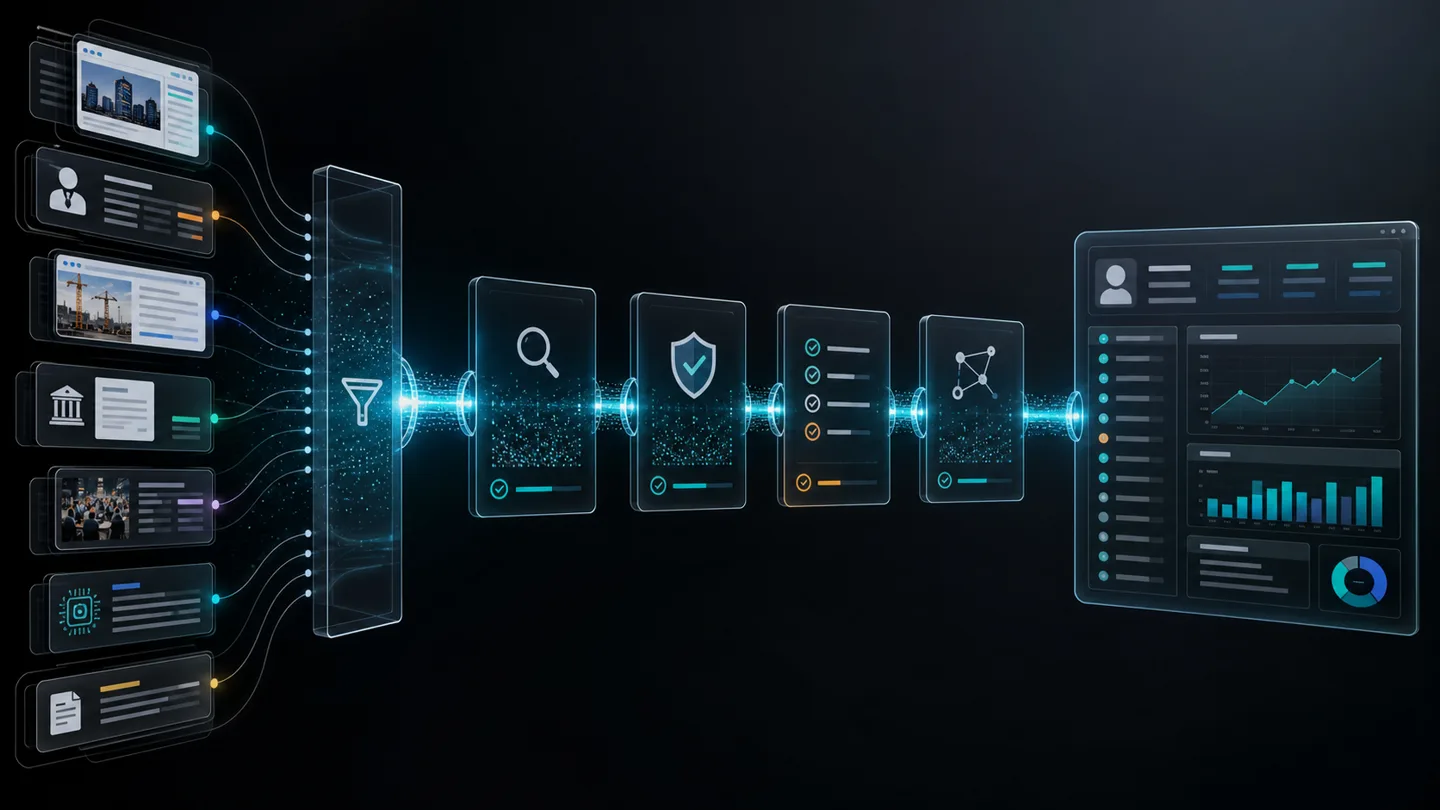
In document-heavy workflows, the enterprise question is not just can the model describe the file? It is can every material claim be tied back to a page, a source span, a reviewer decision, and a release boundary?
That is why the production standard is not merely PDF support. It is page-cited evidence.
Why this matters now
The platform direction is obvious.
- OpenAI is treating file inputs and vision as normal inputs to the API.
- Anthropic is documenting PDF-native workflows, page limits, and citation-dependent visual understanding paths.
- Open-weight serving stacks are documenting multimodal inputs as an operational feature area.
So document review is becoming easier to stand up across hosted and self-managed systems.
But the operational failure mode is not that the model cannot read the document at all. It is that the model produces a plausible statement with weak traceability:
- the sentence sounds right but the source page is unclear,
- the model summarizes a table without preserving which row or note mattered,
- a chart or markup is described correctly in spirit but not in the exact context needed for release,
- or a finding crosses from extraction into judgment without an explicit reviewer handoff.
In a consumer setting, that may be acceptable.
In enterprise review, A/E QC, technical due diligence, procurement review, or regulated documentation, it is not enough.
What current vendor docs are already telling teams
The source material already points toward an evidence-bound workflow.
OpenAI's PDF guide does not frame PDFs as magic text blobs. It distinguishes PDF-specific behavior such as image and chart limitations and configurable detail levels. That is a clue that document ingestion is not one flat mode. The system may treat visible layout, embedded graphics, and extracted text differently, and teams need to know which path shaped the answer.
Anthropic's PDF support docs make that even more explicit. The public docs note page-count limits, warn that dense PDFs can hit context limits before page limits, and state that visual PDF understanding through some API paths requires citations to be enabled. That is not a minor implementation footnote. It is a production signal that document review quality depends on how evidence is preserved, not just whether the upload succeeds.
vLLM's multimodal documentation matters for the same reason. Once self-hosted systems normalize multimodal inputs, more enterprises will move document workflows into private infrastructure. When that happens, teams inherit the responsibility for evidence standards, queue behavior, fallback policy, and human release gates. Private deployment does not remove the need for page-cited review. It makes the governance obligation more direct.

The costly anti-pattern: document answers without review-grade provenance
A lot of teams stop too early.
They upload a document, ask for issues, and get a neat answer. The output may even sound technical and confident. But the workflow is still missing the parts that turn a model response into a review artifact:
- a stable file identifier and version,
- page references for each material finding,
- captured snippets or rendered context when layout matters,
- flags for ambiguity, omission, or contradiction,
- and a reviewer action that approves, suppresses, rewrites, or escalates the result.
Without those controls, the enterprise ends up with an answer that is easy to read and hard to trust.
This is where technical review differs from generic summarization. If the issue involves a note, schedule row, revision cloud, equipment tag, cross-reference, or detail callout, the reviewer often needs to see the exact page context. A plain-language summary may be directionally useful, but it is not yet a releasable finding.
The PAGE standard for enterprise document review
A practical operating pattern is PAGE.
P: Preserve document and page boundaries
Every run should keep the source file identity, version, and page boundary visible. Do not flatten multi-page review into one anonymous blob of extracted text if the downstream task needs page accountability.
If the workflow spans revisions, preserve which file and which issue date produced each finding. A good review packet can answer, "Which exact document did this come from?" before it ever answers, "What did the model say?"
A: Attach each claim to page-cited evidence
Every material finding should carry a page citation, and when possible, the exact supporting snippet or render reference that justified it.
This is the difference between a helpful summary and an auditable review record. If a finding cannot be traced to the page that created it, the workflow should label it as a lead for human review, not as a completed review statement.
G: Gate geometry-sensitive judgments
Not every PDF issue is a plain-text issue.
Tables, diagrams, callouts, dimensions, markup overlays, and sheet composition can all affect meaning. When geometry or layout materially changes the interpretation, the workflow should gate the result for human confirmation or for a marked-PDF step when geometry is available.
That is especially important in A/E document review, where the difference between a note applying to one area or another can change the meaning of the finding entirely.
E: Escalate contradictions and release decisions
Document AI should not hide uncertainty.
If the extraction path and the visual path disagree, if pages appear missing, if a table is partially unreadable, or if the model cannot map a claim back to a page cleanly, the workflow should escalate instead of smoothing over the gap.
Final release should belong to a governed review step, not to the same model call that produced the draft observation.
Where this shows up first
A/E QC and peer review
Complex drawing sets, schedules, narratives, and specifications produce findings that depend on page context and reviewer judgment. Source-cited comments and marked PDFs are far more useful than a free-floating chat summary.
Technical diligence and procurement review
When teams compare bids, scopes, vendor attachments, or technical submittals, page-cited evidence makes it easier to prove what was present, what was missing, and what needs escalation.
Private multimodal AI deployments
Once document review moves into local or hybrid infrastructure, teams need an explicit standard for how evidence is carried through extraction, prompting, storage, routing, and review. A private stack without a page-citation standard is still operationally loose.

Questions buyers should ask now
- Does the workflow preserve file version and page identity for each finding?
- Which outputs are treated as page-cited findings versus human-review leads?
- How does the system handle dense tables, charts, or layout-heavy pages?
- Can reviewers inspect the exact page context behind a material claim?
- What happens when extraction quality is weak, pages are missing, or sources conflict?
- Is there a release gate where a reviewer approves, rewrites, suppresses, or escalates findings?
- Does the final deliverable look like a review packet, or just a chat transcript?
If those answers are unclear, the system may still be useful for triage. It is not yet a reliable review workflow.
The commercial takeaway
PDF AI is getting easier to buy, easier to build, and easier to self-host.
That is not the same as making review-grade outputs easy.
The durable enterprise advantage will come from workflows that preserve source pages, separate extraction from judgment, and keep a human release boundary around important findings. Teams that adopt that standard will get more usable automation from multimodal AI without pretending that document fluency equals review adequacy.
In other words: the winning system is not the model that can read a PDF. It is the workflow that can prove where each finding came from.
Related reads
- Architect-Led A/E Peer Review Services
- VexASI Methodology
- Reasoning Summaries Are Not Audit Logs
- Private AI Needs SLOs