
Reasoning models are making a new mistake look sophisticated.
Teams see a reasoning summary, a thinking block, or a model-produced explanation and assume they finally have an audit trail.
Usually they do not.
They have a provider-shaped summary of internal reasoning, plus whatever application logs their own system chose to preserve.
That distinction matters because the enterprise question is not just “Did the model think hard?” It is “What evidence shaped the output, what tools ran, what state changed, and what can we prove after the fact?”
Current platform documentation is moving in a very specific direction here.
Reasoning is becoming more explicit. Auditability is not becoming automatic.
The current docs say reasoning is real, but not fully exposed
The primary-source signal is strong.
OpenAI's current reasoning guide says it does not expose the raw reasoning tokens emitted by the model. Instead, teams can request a summary of the model's reasoning, and that summary only appears when developers explicitly opt in. The same guide says reasoning summary output is returned inside the summary array of the reasoning output item.
OpenAI's current Responses API blog goes further. It says reasoning is preserved internally, encrypted and hidden from the client, and that safe continuation can happen through previous_response_id or reasoning items without exposing raw chain-of-thought. The blog also explains why: the platform should not make an unaligned chain of thought directly visible to users.
Anthropic's current extended-thinking docs point to the same operational lesson from a different direction. The page description says teams can control how thinking content is returned. The examples show responses containing summarized thinking blocks. The same docs say the budget_tokens limit applies to full thinking tokens, not the summarized output, and they also document redacted_thinking blocks that contain encrypted thinking content.
Put those together and the message is simple.
Reasoning is not the same thing as a complete, stable, user-visible execution record.
Sometimes it is summarized. Sometimes it is hidden. Sometimes it is encrypted. Sometimes it is preserved across turns without ever being exposed directly.
That is not a bug. It is the product design.
Why this breaks the audit-log fantasy
Many enterprise teams want one artifact that does everything at once:
- explain why the model answered the way it did,
- prove the answer was grounded,
- show whether tools ran,
- show whether the workflow stayed inside policy,
- and support review after a bad outcome.
Reasoning summaries do not reliably do all of that.
1. A reasoning summary is not the full internal process
OpenAI says the raw reasoning tokens are not exposed. Anthropic distinguishes between full thinking tokens and summarized output, and also documents redacted thinking content.
That means the developer-visible reasoning artifact is already a filtered representation.
If it is filtered by design, it should not be treated as the single source of truth for what happened.
2. A reasoning summary is not the evidence packet
Even a detailed explanation can still omit which source documents were retrieved, which passages were used, whether contradictory evidence existed, which tool call arguments were sent, or whether a human approved the next step.
A clean explanation can sound persuasive while still leaving the evidentiary chain incomplete.
3. A reasoning summary is not the action transcript
Enterprise risk usually appears when a model moves from text generation into tool use, routing, approval requests, file mutation, browser actions, or downstream handoffs.
The real operational question is often not “What did the model think?”
It is “What did the system do, in what order, with which inputs, and what changed because of it?”
4. A reasoning summary may vary with model and settings
Current OpenAI docs describe different reasoning summary settings by model. Anthropic documents model-version differences around thinking output, interleaved thinking, and block preservation.
That is another reason not to treat reasoning summaries as a canonical audit substrate. They are part of the interface contract, not a universal forensic record.
The useful distinction: summary, rationale, and evidence
Teams get much clearer when they separate three different artifacts.
Reasoning summary
This is the provider-mediated description of internal reasoning. It can be useful for debugging, product UX, or operator review. It is not the same thing as a complete workflow record.
Rationale statement
This is the user-facing explanation the application chooses to present, usually based on retrieved facts, source excerpts, calculations, or structured outputs. It should be concise, readable, and tied to visible evidence.
Evidence record
This is the operational record the enterprise actually needs. It should show inputs, versions, tool calls, outputs, approvals, and final state in a way another human can inspect later.
The biggest production mistake is collapsing all three into one text blob and calling it transparency.
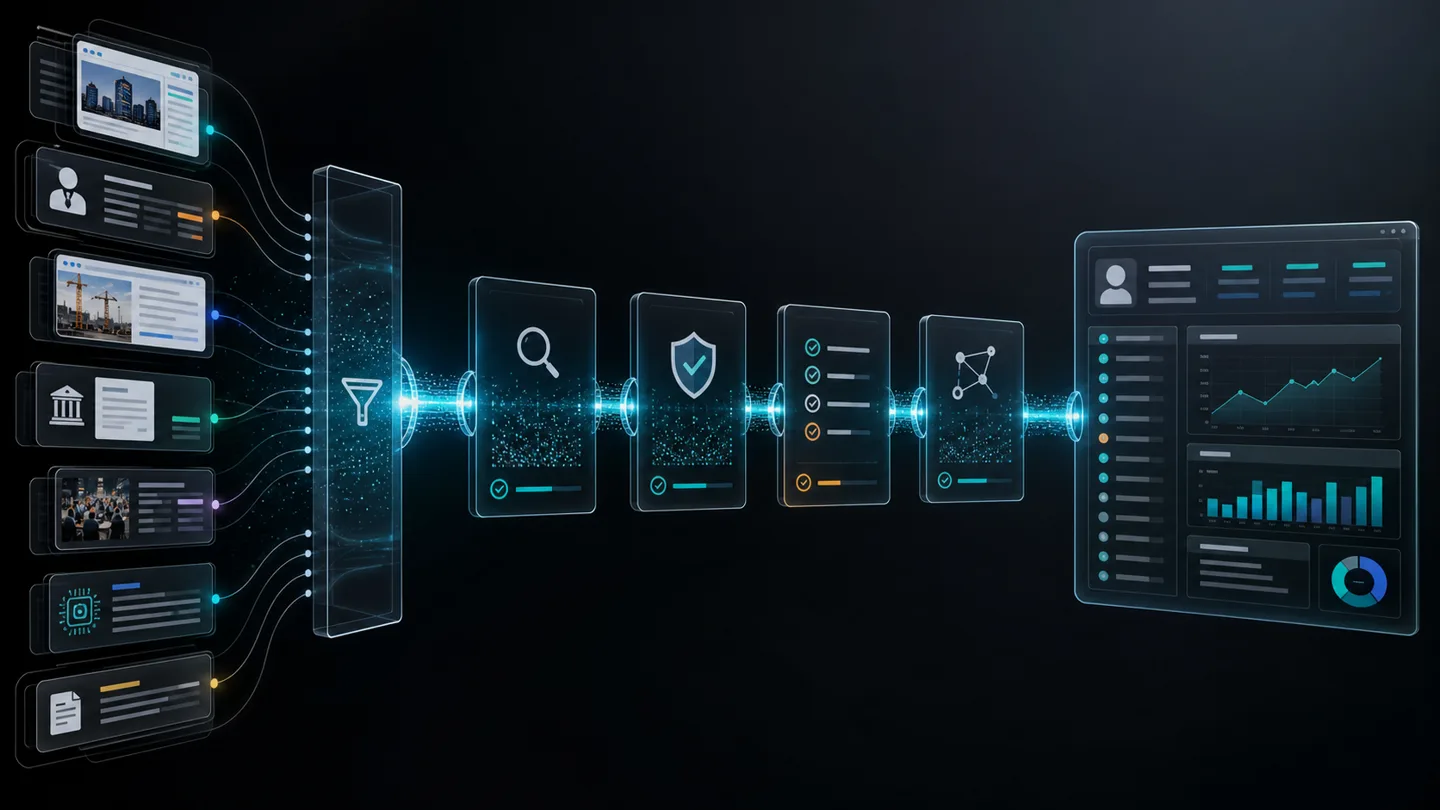
The TRACE standard for enterprise AI evidence
A practical alternative is to define a separate evidence standard around the workflow itself.
One useful model is TRACE.
T: Task boundary
Record what the model was asked to do, what it was not allowed to do, and what completion looked like. A bounded task is far easier to inspect than an open-ended conversation.
R: References used
Preserve the visible source set that mattered: retrieved files, URLs, document versions, timestamps, quoted spans, and contradiction notes if multiple sources disagreed.
A: Actions taken
Log tool invocations, arguments, tool outputs, side-effect attempts, retries, and whether the workflow stayed read-only or crossed into state-changing behavior.
C: Contracts and checks
Preserve the schema version, validation result, guardrail outcome, approval rule, and any post-processing checks that determined whether output could proceed.
E: Escalation and execution state
Show whether a human approved, blocked, edited, resumed, or executed the next step. If something changed outside the model, that belongs in the record too.
That evidence layer is much closer to an actual enterprise audit trail than a reasoning summary ever will be.
What reasoning summaries are still good for
This does not make reasoning summaries useless.
They can be valuable when teams use them for the right jobs.
- Operator debugging: spotting why a model chose one route over another.
- Workflow tuning: identifying weak instructions, bad tool descriptions, or missing context.
- Triage UX: giving a reviewer a fast sense of the model's approach before they inspect the source packet.
- Quality analysis: comparing failure patterns across tasks or model versions.
The key is not to confuse a useful summary with a legally, operationally, or procedurally complete record.
Where this matters most right now
Agentic workflows with tools
Once a model can search, browse, read files, call internal tools, or prepare downstream actions, the evidence burden moves from text quality to execution quality.
The team needs the tool transcript, not just a polished explanation.
High-context review work
In AEC, technical operations, procurement, and quality workflows, the receiving reviewer often needs the exact source locations, not a paragraph saying the model considered several factors.
Approval-sensitive automation
If human approval gates matter, the approval event itself belongs in the record alongside the recommended action, confidence note, and source packet.
Post-incident analysis
When something goes wrong, teams need to reconstruct inputs, decisions, tools, and state transitions. A reasoning summary may help, but it usually cannot carry that entire burden by itself.
Questions buyers should ask vendors and internal teams
- What is our official audit artifact for this workflow?
- Does it preserve source references, tool actions, validation results, and approval state?
- Which parts of the record come from provider-managed reasoning features, and which parts do we own ourselves?
- Can we reconstruct a bad run without relying on hidden or encrypted thinking?
- Are user-facing explanations derived from visible evidence, or from private internal reasoning we cannot independently inspect?
- What happens to the evidence standard when the model, summary mode, or tool configuration changes?
If those answers are vague, the system may look interpretable while still being hard to govern.
The commercial takeaway
The market is moving toward richer reasoning features.
That is useful.
But the current primary-source docs also show a limit that enterprise teams should take seriously: reasoning may be summarized, redacted, encrypted, or hidden by design.
So the durable governance move is not to demand raw chain-of-thought from every platform.
It is to build a workflow evidence layer that stands on its own: clear task boundaries, visible sources, action logs, output contracts, approvals, and final-state records.
That is the layer a technical operator can trust, a reviewer can inspect, and a business can improve without guessing what happened inside the model.
Related reads
- Thinking Mode Is Now an Infrastructure Decision: The Enterprise Playbook for Reasoning Models
- Structured Outputs Are Becoming the Control Layer for Enterprise AI
- Prompt Injection Is Now an Operations Problem: Why Enterprise AI Needs a Quarantine Layer
- AI Workflow Services