
Most AI teams say they want resilience.
In practice, many of them are still doing something weaker: they point a workflow at a primary model, keep a backup model in reserve, and assume failover preserves the same operating behavior.
That assumption is getting harder to defend.
Current provider and runtime docs make it clear that model routes now differ across tool use, structured outputs, long-running execution, and who actually runs the tool. A fallback route can absolutely be useful. It just should not be treated as invisible.
Enterprise AI needs a fallback contract.
Why this matters now
The feature surface around production AI is widening fast.
OpenAI's current function-calling guide says models can use function tools defined by a JSON schema and custom tools that work with free-form text inputs and outputs. Its current structured-outputs guide also distinguishes between valid JSON and schema adherence, and says schema-constrained response formats are supported only on compatible model families and later snapshots.
Anthropic's current tool-use docs distinguish between client tools that your application executes and server tools that Anthropic executes. The same page says strict: true can be added to custom tools so Claude tool calls match the schema exactly.
Google's current Gemini function-calling docs describe parallel function calling, compositional function calling, and explicit tool-choice modes like auto, any, none, and validated.
vLLM's current tool-calling docs are just as revealing from the self-hosted side. They say named function calling is supported, but the system only guarantees a validly parsable function call, not a high-quality one. The same page also documents parser-specific tool-calling paths across model families.
That means a backup route is no longer just a throughput choice. It can change the contract of the workflow itself.
Fallback is not the same thing as equivalence
Teams often use the word fallback as if it means same behavior, different provider.
Usually it does not.
If the primary route supports strict schema adherence and the backup route only returns best-effort JSON, the output contract changed.
If the primary route can call multiple tools in parallel and the backup route cannot, the execution plan changed.
If the primary route keeps a task in a long-running asynchronous lane and the backup route forces a short synchronous retry, the recovery path changed.
If the primary route runs locally with approved client tools and the backup route uses hosted or provider-executed tools, the data and trust boundary changed.
Those are not minor implementation details. They affect what work is allowed, what evidence survives, and what a reviewer can trust.
Where silent fallback breaks real workflows
1. Tool behavior changes under the same user request
OpenAI, Anthropic, Google, and vLLM all document tool use, but not in identical ways.
That matters because a workflow that depends on tool choice, parallel calls, server-side execution, or strict schemas is not portable by default. A backup model might still produce a tool call, but that does not mean it preserves the same behavior, sequencing, or failure mode.
2. Structured data guarantees weaken quietly
OpenAI's docs explicitly separate valid JSON from schema adherence. Anthropic exposes strict tool use. Google exposes validated tool-choice behavior. vLLM documents constrained generation paths that force parseable tool objects.
These are related capabilities, not identical guarantees.
When a workflow consumes structured outputs for routing, approvals, evidence packets, or downstream automation, a fallback route can change the reliability of those objects even when the top-level prompt looks unchanged.
3. The trust boundary moves
Anthropic's docs draw a clear line between client tools that your application executes and server tools that Anthropic executes. Google's docs now include remote MCP server support. OpenAI's tool ecosystem spans multiple tool types and execution patterns. Self-hosted vLLM adds parser and runtime choices on your own infrastructure.
So a fallback route may not just change the model. It may change who runs the tool, where the request travels, and which audit path you have afterward.
4. Recovery logic becomes inconsistent
OpenAI's background-mode docs describe long-running tasks executed asynchronously with polling. That is useful for durable workflows, but it also means some routes are designed for long-running stateful execution while others are optimized for quick synchronous turns.
If fallback happens without an explicit contract, teams can lose consistency on polling, timeout expectations, retry boundaries, and what counts as a recoverable run.
5. Human review assumptions stop matching the live lane
A reviewer may approve a workflow because the primary route is local-only, schema-bound, and limited to read-only tools. If the backup route is hosted, uses weaker structure guarantees, or changes the tool inventory, the original approval no longer cleanly applies.
This is especially important for evidence-heavy operations, document review, sourcing, technical intake, and any workflow where downstream action depends on reproducible context.
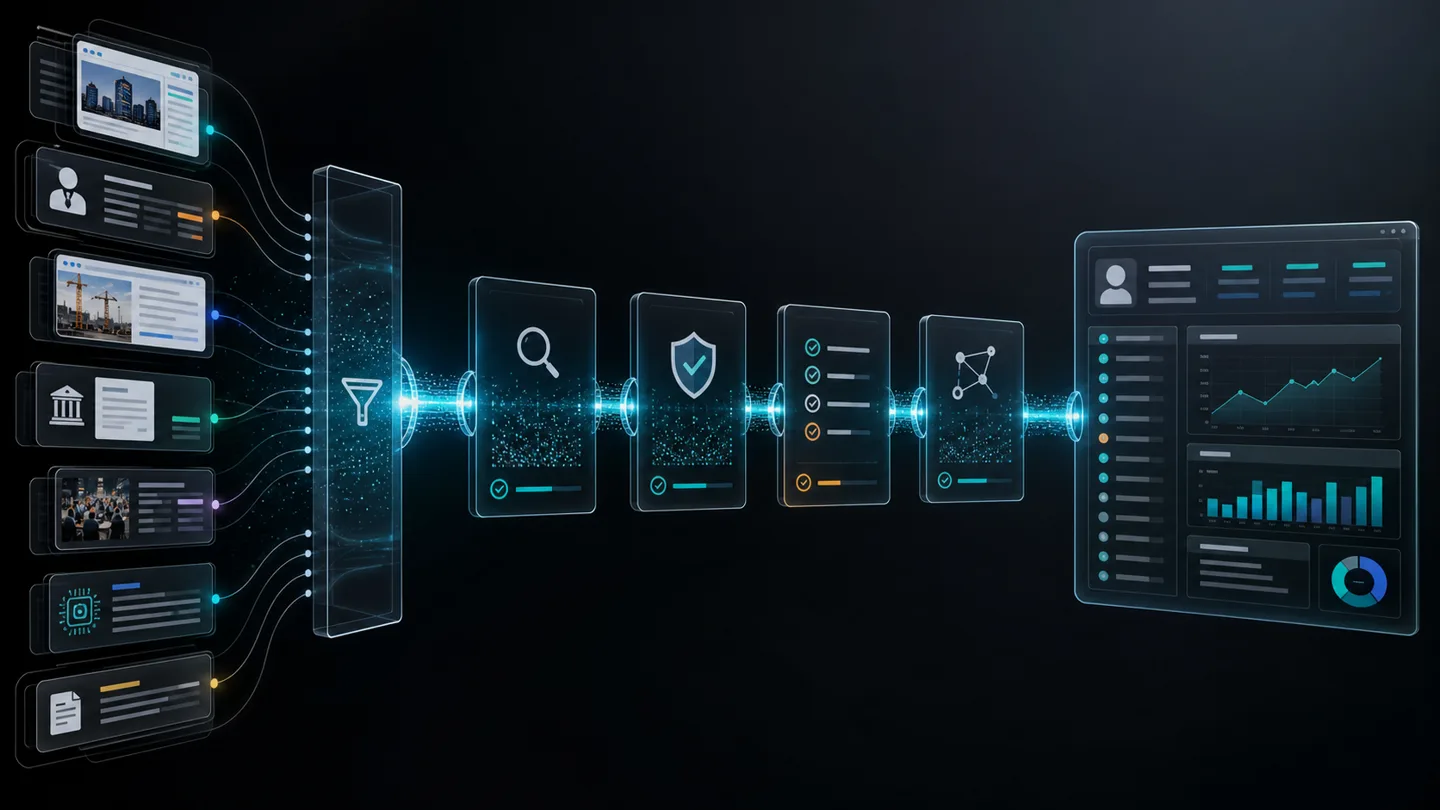
What a fallback contract should define
A useful fallback contract is not a giant policy deck. It is a practical release artifact that tells the system what may change and what must not.
1. Capability floor
List the minimum capabilities required for the workflow to remain valid: tool use, strict schema adherence, background execution, citation support, max context, or whatever else actually matters for that run type.
If the backup route cannot meet that floor, it should not be treated as equivalent fallback.
2. Allowed degraded modes
Define what the backup route is still allowed to do. For example: summarize evidence but do not call tools; extract fields but do not auto-route; draft a packet but do not mark it release-ready.
Fallback often works best as a narrower operating mode, not a fake copy of the primary lane.
3. Data-boundary map
Record whether each route is local, self-hosted, provider-hosted, or uses provider-executed server tools. The fallback contract should say which data classes may cross which boundary.
This is where many hybrid AI stacks get sloppy.
4. Tool and schema contract
Record the exact tool set, required tool-choice behavior, schema mode, and parser/runtime assumptions. If the route changes from strict structured output to best-effort parsing, the workflow should know it is in degraded mode.
5. Review and escalation rules
State whether approval must be re-collected when the route changes. In many enterprise workflows, the answer should be yes.
A route-aware approval record is stronger than a generic “human in the loop” claim.
6. Route-specific validation set
Keep a small test set of representative tasks and expected results for the primary and backup lanes. If the backup lane cannot pass the scenarios it is supposed to cover, it is not a fallback. It is wishful thinking.
Questions technical buyers should ask now
- What exactly is allowed to change when the primary model fails?
- Which capabilities are mandatory for the workflow to stay valid?
- Does the backup route preserve schema guarantees, tool behavior, and review gates?
- Is the backup lane local, self-hosted, provider-hosted, or server-tool executed?
- What work is explicitly blocked on fallback instead of silently downgraded?
- Which regression set proves the backup route is safe enough for the workloads it covers?
If those answers are vague, the team may have redundancy on paper but not reliable resilience in production.
Why the governance angle matters
NIST's AI Risk Management Framework says it is intended to improve how teams incorporate trustworthiness considerations into the design, development, use, and evaluation of AI systems.
Fallback behavior belongs squarely inside that scope.
It shapes whether a system remains predictable under failure, whether data stays inside the approved boundary, and whether a reviewer can still explain why a given output or action was allowed.
That is not abstract governance. That is workflow validity.
The commercial takeaway
More AI vendors and self-hosted runtimes now support tools, structured outputs, background execution, and model routing.
That is good news. It gives enterprises more room to design resilient systems.
But resilience does not come from saying “we have a backup model.” It comes from defining what the backup model is allowed to preserve, what it is allowed to degrade, and when it must stop and escalate.
The teams that win will treat fallback as a contract, not a hope. That is how AI workflows stay dependable when the primary route is slow, unavailable, or no longer approved for the task in front of it.
Related reads
- Disconnects Are Not Cancellations: Why Enterprise AI Needs Run-State Reconciliation
- Structured Outputs Need a Refusal Contract: The Enterprise Gate Between Valid JSON and Safe Action
- Private AI Needs Queue Classes: Why Chat, Batch, and Agent Runs Should Not Share One Inference Lane
- AI Workflow Services