
Enterprises are starting to treat agent tooling as plug-and-play infrastructure.
OpenAI's current tools guide says teams can extend model responses with built-in tools, function calling, tool search, and remote MCP servers. The same guide says those tools can load deferred tool definitions at runtime. OpenAI's current Responses API blog frames the broader platform direction the same way: persistent reasoning, hosted tools, and multimodal workflows are becoming normal parts of production AI.
Meanwhile, the Model Context Protocol is formalizing how tools are discovered and called. The current MCP tools specification describes tools/list, tools/call, and a listChanged capability for tool-set updates. MCP transport guidance adds session management plus resumability and redelivery on streamable HTTP. On the self-hosted side, vLLM's current serving docs now expose an OpenAI-compatible server and list examples for OpenAI Responses clients with MCP tools.
That is useful progress.
It also means the enterprise question is no longer just what answer did the agent produce? It is what exact runtime bundle produced it?
If the answer cannot be reconstructed later, the workflow is harder to replay, harder to approve, and harder to trust when the surrounding tool stack changes.
Why this matters now
A lot of agent systems are becoming more dynamic by design.
- Tool definitions can be loaded at runtime.
- Remote servers can add or remove tools.
- Access scopes can differ by environment, run, or user.
- The same agent route can call a hosted model one day and a private OpenAI-compatible endpoint the next.
- Recovery flows can resume a run after a transport interruption or partial failure.
All of that increases flexibility. It also increases drift.
Without a versioned record of the runtime, teams end up with an answer and a few logs, but not the operational proof needed to answer questions like:
- Which exact tools were available when this run executed?
- Which schema version shaped the arguments?
- Which access lease or approval state was active?
- Which evidence bundle was in scope?
- Could this run be reproduced after a connector or model update?
Those are not edge-case questions. They are the questions that show up as soon as an agent output matters.
What current platform docs are already signaling
The primary sources all point toward the same operating reality.
- OpenAI tools: tool surfaces are no longer fixed to one hardcoded function list. Remote MCP servers and deferred tool definitions make capability loading more dynamic.
- OpenAI Responses API: persistent reasoning and hosted tools make longer-lived, multi-step runs more common.
- MCP tools: clients can discover tools through
tools/list, invoke them throughtools/call, and receive tool-change notifications whenlistChangedis enabled. - MCP transports: streamable HTTP adds session concerns, resumability, and redelivery considerations to live agent runs.
- vLLM serving: private and hybrid stacks are moving toward OpenAI-compatible serving patterns that increasingly sit in the same operational lane as tool-using agents.
That combination is powerful. It is also why a plain transcript is no longer enough.
A transcript tells you what the model said. A run manifest tells you the controlled conditions under which the workflow ran.
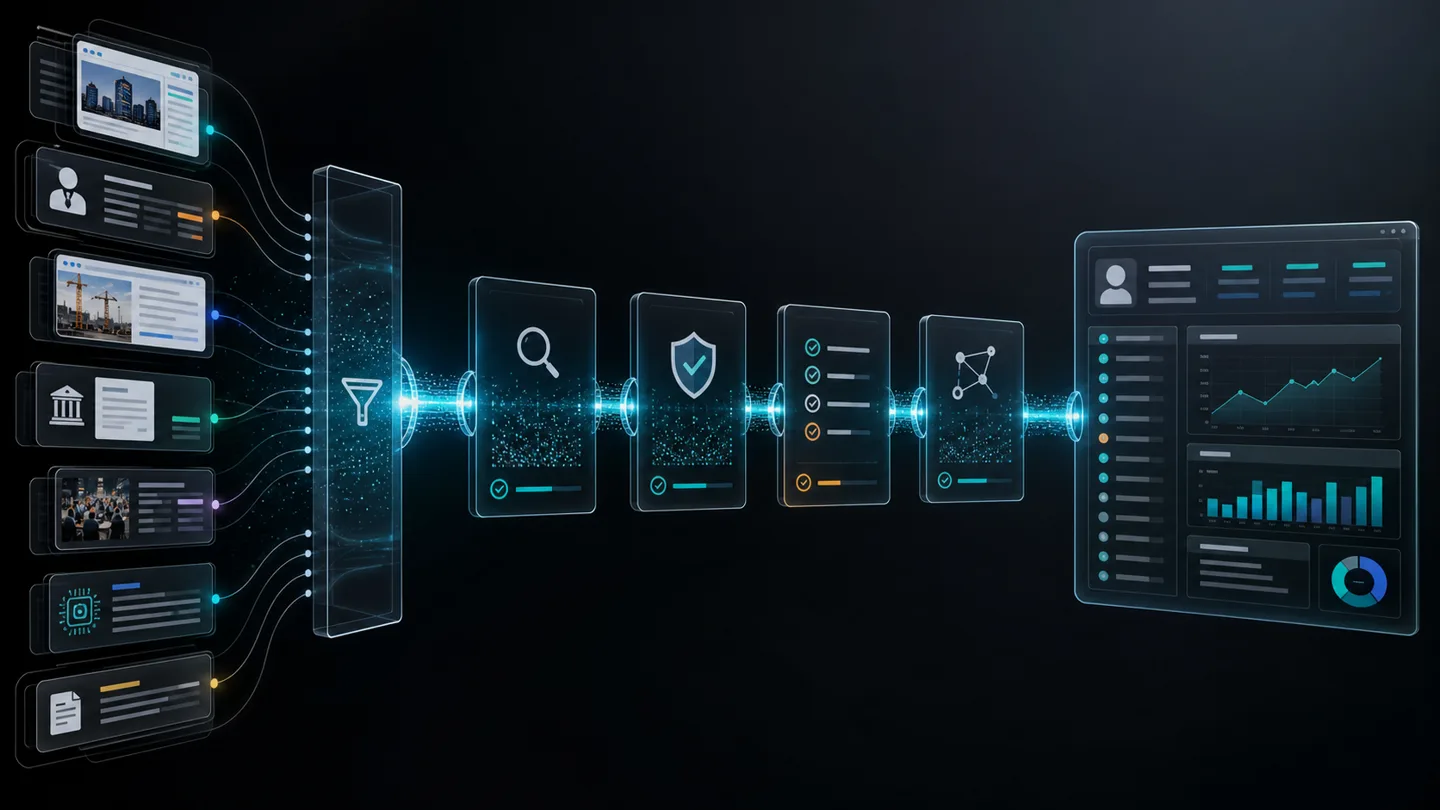
The costly anti-pattern: save outputs, lose the runtime
Many teams still preserve only a subset of what matters:
- the user request,
- the final answer,
- maybe a trace of tool calls,
- and maybe a model name.
That is better than nothing. It is still incomplete.
If the tool registry changes tomorrow, if a remote MCP server updates an input schema, if a new approval rule is inserted, or if the local serving route switches models, the old run can become hard to interpret. The answer may still exist, but the execution conditions are no longer clear enough to defend, replay, or compare.
This is the same class of problem that mature software systems solved with lockfiles, deployment manifests, and environment capture. Agent workflows need an equivalent control surface.
The TRACE framework for agent run manifests
A practical pattern is TRACE.
T: Tool inventory and schemas
Record the exact tools that were visible to the run, including tool names, server identity, relevant schema versions, and whether the tool set was static or dynamically discovered.
If the MCP server supported change notifications, preserve that fact too. A later investigation should be able to answer whether the available tool surface could have changed during the workflow period.
R: Runtime model and route
Preserve the model, provider or local endpoint, route class, reasoning mode when relevant, and any fallback path the workflow was allowed to use.
That matters because an enterprise may route the same workflow across hosted GPT models, a private OpenAI-compatible server, or a downgraded local fallback depending on load, policy, or outage state.
A: Access scope and approvals
Capture which lease, token scope, environment, or approval state was active.
A tool call made under read-only access is not equivalent to one made under write access. A run executed before a human approval step is not equivalent to one executed after approval. The manifest should preserve that distinction.
C: Context and evidence bundle
Record the inputs that materially shaped the run: source files, retrieval set identifiers, timestamps, document versions, and any evidence package that should remain stable across replay.
If the workflow is ever resumed or re-reviewed, another operator should be able to tell whether the run used the same source basis or a different one.
E: Execution policy and output contracts
Preserve the prompt or policy bundle version, structured-output schema version, timeout class, and review requirements that governed the run.
This is what keeps a later replay from quietly shifting the rules. If the run originally required a schema-bound output and a human approval gate, the manifest should make that obvious even after the surrounding platform evolves.
Where run manifests matter first
Tool-rich enterprise agents
The more connectors, MCP servers, and function surfaces an agent can reach, the more important it becomes to preserve exactly what capabilities were present at runtime.
Recovery-first workflows
When a run pauses, resumes, or redelivers across transports, teams need to know whether they are continuing the same governed run or effectively starting a new one under changed conditions.
Private and hybrid inference stacks
Once local serving and hosted models coexist behind similar APIs, route capture becomes essential. Otherwise teams cannot tell whether a result came from the approved private lane or an alternate fallback.
Approval-sensitive operations
If an output can affect vendors, schedules, project decisions, or technical review packets, the approval state and access scope need to stay attached to the run record, not just to the final answer.

Questions buyers should ask now
- Can the platform reconstruct the exact tool list and schemas visible to a past run?
- Does the run record preserve prompt, policy, and structured-output contract versions?
- Can operators prove which model route actually executed the workflow?
- Are access scope, approval state, and side-effect boundaries attached to the run record?
- If an MCP server changes tomorrow, can yesterday's run still be interpreted correctly?
- Can a failed or paused run resume without silently changing its evidence basis?
- Does the system store a replayable manifest, or only a chat transcript and some logs?
If those answers are weak, the system may still look advanced. It is not yet operationally controlled.
The commercial takeaway
Agent platforms are getting easier to wire together.
Remote MCP servers, OpenAI-compatible serving, and built-in tool stacks will keep lowering the barrier to launch. The harder enterprise problem is making those runs explainable after the surrounding environment changes.
The durable advantage will not come from the team with the longest tool menu. It will come from the team that can reconstruct exactly what the agent knew, which tools it could reach, what access it had, and what policy governed the result.
That is what a run manifest does.
In other words: if a workflow cannot replay its operating conditions, it is not ready to carry meaningful operational trust.
Related reads
- Tool Calls Are Not Outcomes
- AI Agents Need Credential Leases
- Resumable AI Workflows Beat Autonomous Agents
- AI Workflow Services