Agentic AI is moving into supply chain work because the work is full of repeatable decisions, stale handoffs, conflicting constraints, and expensive exceptions. That does not mean the smartest move is to let agents run loose. It means the operating system around the agent matters more than the agent demo.
The pressure is obvious. Supply chain teams are asked to respond faster to demand swings, supplier disruption, freight volatility, inventory pressure, labor constraints, and customer promises that change after the plan is already moving. Agentic AI looks attractive because it can monitor context, suggest actions, draft responses, compare options, and keep work moving across planning, procurement, logistics, and service recovery.
But the workflows that matter are not clean chatbot workflows. A replenishment decision may depend on supplier history, demand forecast confidence, substitute availability, route constraints, expedite cost, service-level commitments, and the business rule that no one remembered to document. A transportation exception may involve a carrier update, a warehouse constraint, a customer escalation, weather risk, and an internal margin decision. The system has to show its work.
The agent is not the system
A supply chain agent can classify an exception, recommend a supplier switch, draft a buyer note, summarize a carrier dispute, or flag a likely shortage. Useful. Not enough. The system has to preserve the source records that shaped the output: purchase orders, shipment updates, EDI events, ERP fields, contracts, service terms, forecasts, historical cycle times, approvals, and prior exception outcomes.
Without that trail, teams inherit a new trust problem. Was the recommendation based on current data or a stale snapshot? Did the model understand the constraint or just produce a plausible action? Did it mix public market context with private operating data? Did it ignore the customer promise that actually decides the priority? Can a planner reverse the decision path after the shipment misses the window?
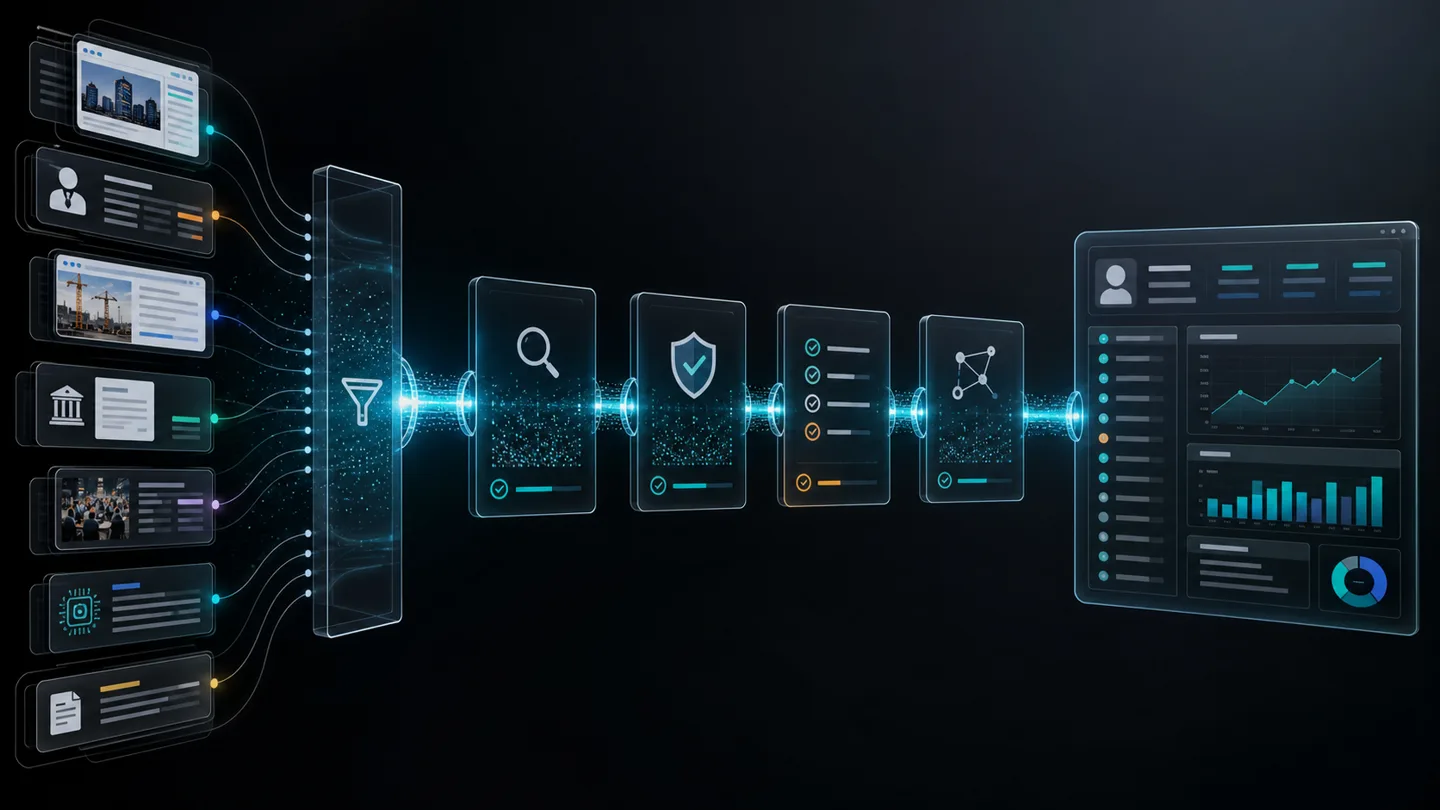
Evidence trails make AI workflows operational. They let teams trace a recommendation back to inputs, timestamps, confidence notes, rejected alternatives, human overrides, and downstream outcomes. That is where agentic AI stops being a novelty and starts becoming a governed workflow.

Supply chain AI will create more decisions, not fewer
The first wave of agentic supply chain tools will not simply remove work. It will increase the number of machine-generated recommendations. That creates a new burden: triage. Which recommendations deserve immediate action? Which need a buyer, planner, engineer, finance lead, or customer owner? Which are low-risk automations? Which need a documented exception approval?
The strongest teams will define review thresholds before the volume arrives. Low-impact status updates can be automated. Medium-impact recommendations can require structured human approval. High-impact moves like supplier replacement, customer delivery commitments, premium freight, or contract-affecting changes should carry visible evidence, business rules, and escalation paths.
This is where the evidence trail becomes a speed tool. Reviewers should not have to dig through five systems to understand why the AI thinks action is needed. The workflow should package the record: what changed, where the source lives, what the model inferred, what confidence looks like, what business rule applies, what action is recommended, and what happens if no one acts.
The market is already pointing this direction
Gartner has forecast rapid growth for supply chain management software with agentic AI capabilities by 2030, and its supply chain coverage has repeatedly framed intelligent agents as a coming layer inside planning and execution tools. That does not mean every deployment will be mature. It means buyers should expect more AI-generated actions inside the tools they already use.
The risk is that teams adopt the agent and skip the operating discipline. A planner gets a recommendation without a source trail. A buyer gets an automated supplier note without seeing the constraint. A manager approves a change without knowing which data was current. A postmortem cannot separate model error from bad input, bad policy, or human override.
That failure mode is avoidable. Treat agentic AI as a workflow component, not a replacement for the control system. Build records that preserve source links, timestamps, decision fields, review state, and learning loops. Then the organization can tune the workflow instead of arguing about whether the AI was generally "right."
The evidence trail should be designed, not bolted on
A useful supply chain evidence trail has a small number of durable fields. It records the triggering event, the source system, the source timestamp, the affected entity, the model output, the cited evidence, the known constraint, the recommended action, the risk level, the required reviewer, the approval decision, and the outcome. That sounds simple. Most organizations do not have it cleanly across functions.
That is why pilots should start narrow. Pick a workflow where the decision is frequent, painful, and evidence-rich: supplier risk monitoring, shipment exception triage, inventory shortage escalation, premium freight review, customer delivery risk, or contract-compliance handoff. Do not start with an autonomous system that touches everything. Start with the record that makes one workflow trustworthy.
The winning supply chain AI stack is boring in the right places
The visible layer will be agents. The durable layer will be records. Teams will still need connectors, retrieval, routing, human review, approvals, logs, and outcome measurement. They will need clear boundaries between public market signals, private operating data, customer commitments, and confidential supplier terms. They will need escalation paths for data conflicts and model uncertainty.
This is not anti-autonomy. It is how autonomy earns trust. An AI system can do more when the organization can inspect the path it took, catch weak evidence, override risky recommendations, and teach the workflow from the result.
The test
If your supply chain AI cannot show the source record, the decision rule, the confidence context, and the human review state, it is not ready to own a meaningful operational decision. It may still be useful. It is just not governed yet.
What VexASI would do now
Start with one high-friction supply chain workflow and design the evidence record first. Define the inputs, the confidence checks, the reviewer thresholds, the source links, the handoff fields, and the feedback loop. Then choose the agentic tool that can operate inside that structure.
The market will keep selling autonomy. The teams that win will buy traceability, reviewability, and learning loops. In supply chain work, speed matters. But speed without an evidence trail is just faster uncertainty.
Sources checked June 29, 2026: Gartner supply chain agentic AI forecast, Gartner intelligent agents prediction, and NIST AI Risk Management Framework.